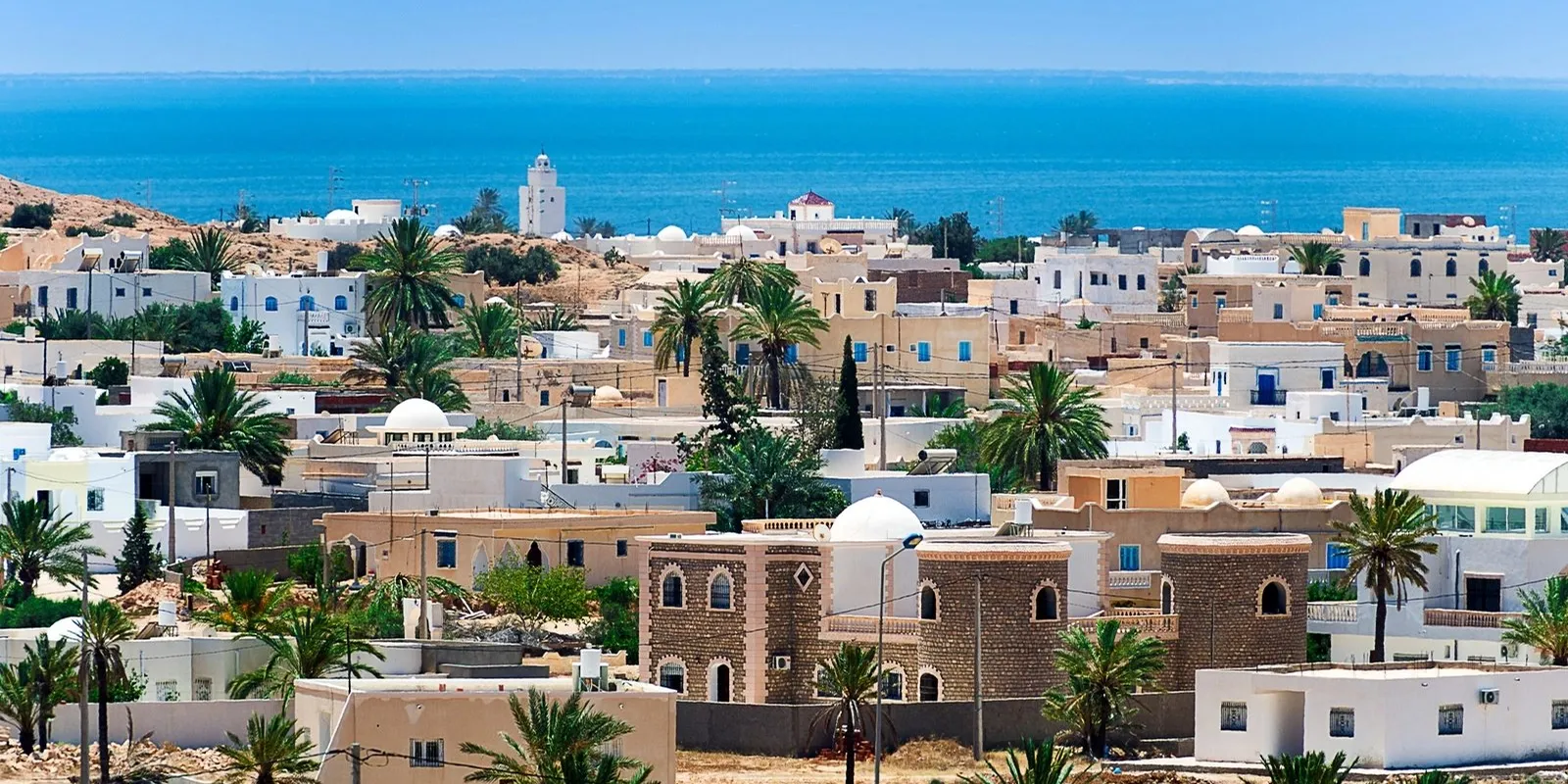

Djerba: synagogues and Berber architecture
An island in the Gulf of Gabes identified by some scholars with the ancient land of the Lotus-eaters cited by Homer, Djerba preserves a centuries-old coexistence between Muslim, Jewish, and Berber communities rarely seen elsewhere in North Africa.
The island requires a car or taxi to connect the different zones, which are distant from each other.
The day begins at the El Ghriba Synagogue, which according to local tradition dates back to before the destruction of the first Temple of Jerusalem: it is among the oldest in the world and every year, for Lag BaOmer, attracts Jewish pilgrims from all over the planet.
Moving toward the center of the island you enter the white alley maze of Houmt Souk, the main inhabited center of Djerba, where local Berber architecture frames the daily commerce of ceramics, sea sponges and fabrics.
In the surrounding villages, thick walls and low minarets in watchtower shape characterize the fortified mosques of the island, which once served as shelter against pirate raids from the sea.
In the afternoon it's worth reaching the eastern coast, where fine sand and shallow waters over kilometers almost uninterrupted, including Sidi Mahres, have fueled the island's tourist development since the nineteen-sixties.
In pottery workshops around Houmt Souk, kilns stay lit all day, and the smell of baked clay mixes with the scent of the sea as soon as you leave the alleys toward the coast.
The island's traditional houses, the menzel, often hide behind high white walls in the middle of olive and palm groves, following a residential pattern that prioritizes family privacy from the street.
Guided tours and experiences in Djerba


Related articles

You might also like...
Sfax: Tunisia's least touristy medina
Monastir: the fort that hosted cinema history

How to avoid unpleasant surprises after booking a flight

King Khaled International Airport: where to stay, areas and recommended hotels
Mumbai: the right lounge by terminal, level and flight
