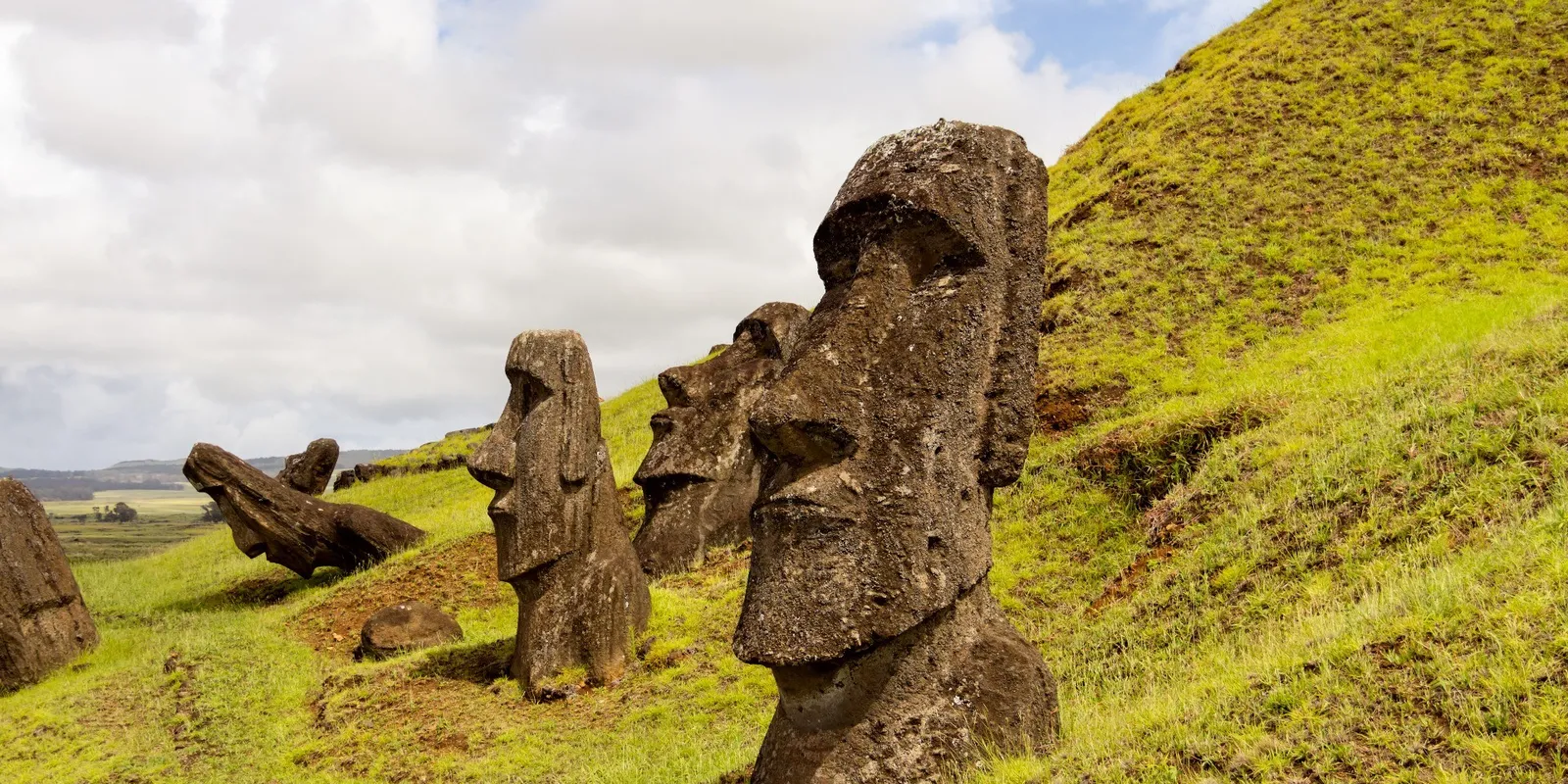

Easter Island: the moai of Rapa Nui
Over three thousand kilometers from the Chilean coast, Rapa Nui shelters hundreds of monolithic statues carved between 1250 and 1500, still at the center of more questions than definitive answers.
The island can be toured by car or organized tours, with contained distances.
At the foot of the Rano Raraku volcano, the quarry where almost all the moai were carved, about four hundred statues remain embedded in the ground, never completed or transported.
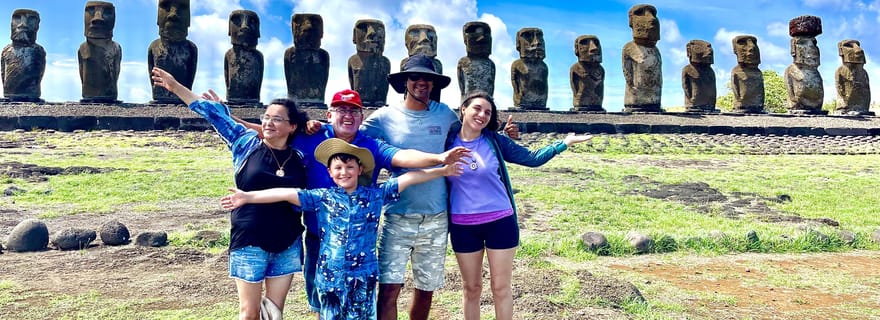
A few kilometers away, Ahu Tongariki aligns fifteen moai restored in the 1990s after a tsunami had toppled them decades before, today the most photographed row of statues on the island.
Climbing the edge of the Rano Kau volcano, one reaches Orongo, a ceremonial village where the bird-man cult was practiced after the decline of moai culture.
Toward evening, the beach of Anakena, one of the few sandy beaches on the island, hosts the restored moai of Ahu Nau Nau, some still bearing the original red-stone headdress.
No one knows for certain how the moai, some standing over nine meters tall, were transported from the quarry to the coastal platforms: theories range from wooden sledges to a rope system that made them 'walk' by rocking.
According to oral tradition, Anakena is the exact spot where Hotu Matu'a, the legendary first inhabitant of the island, landed, making this beach as symbolic as it is touristic.
Guided tours and experiences in Isla de Pascua
Related articles

You might also like...
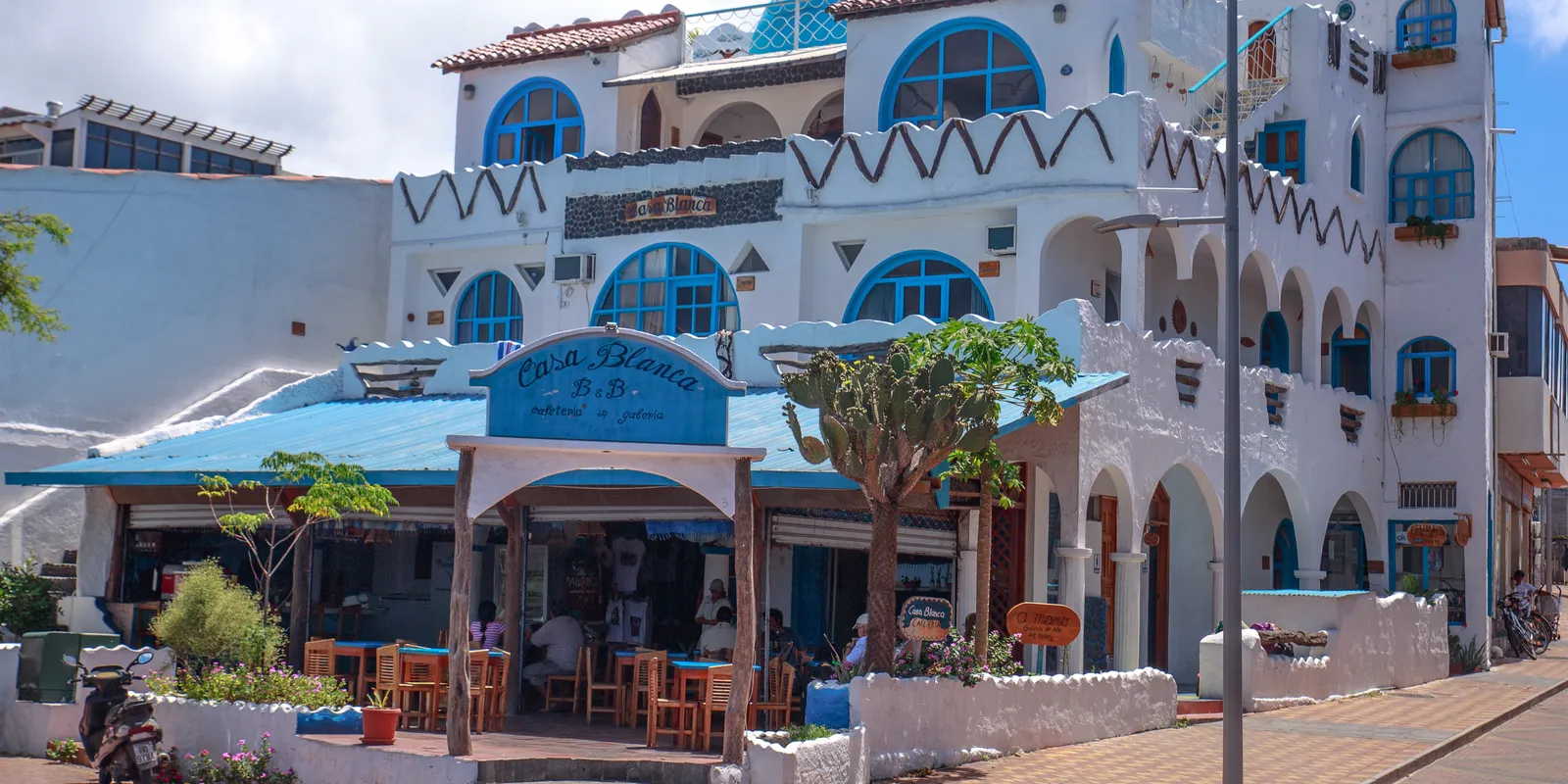
Puerto Baquerizo Moreno: sea lions in the street in the Galápagos
Baltra: the gateway to the Galápagos

SmartWings: The Largest Czech Airline, Between Charter and the Move to Pegasus

How to handle jet lag after the flight: a practical calendar

Newark airport lounges: which one to pick, terminal by terminal