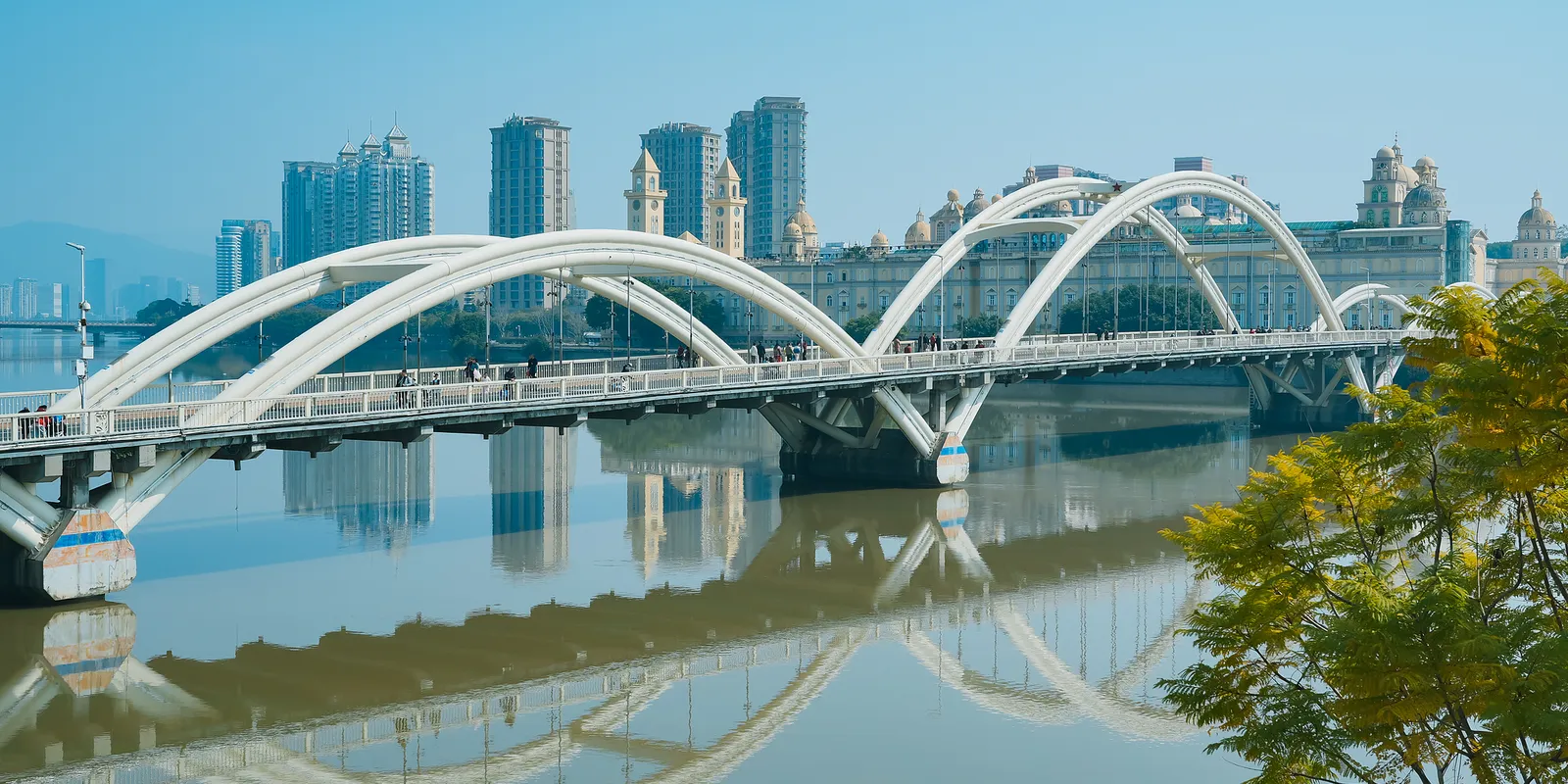

Fuzhou: temples and tea among the hills of Fujian
A historic port of the maritime Silk Road, Fuzhou remains China's green tea capital, cultivated on the hills surrounding the city.
The center, among temples and tea plantations of the Fujian hills, can be comfortably visited by subway.
The Xichan Temple, with its cast iron pagoda from the tenth century, remains one of Fujian's most ancient and venerated Buddhist sanctuaries.
A short walk away, the Sanfang Qixiang neighborhood, with its traditional wooden residences from the Ming and Qing periods, remains the city's best-preserved historic center.
Heading toward the hills, you visit the Jasmine tea plantations, an aromatic variety perfumed with jasmine flowers, invented right here in Fuzhou centuries ago.
As evening arrives, the Min River, which runs through the city, animates restaurants and venues on its illuminated riverside.
Jasmine tea, today widespread worldwide, was invented in Fuzhou during the Song Dynasty, when local artisans discovered how to flavor green tea leaves with dried jasmine flowers.
The neighborhood of Sanfang Qixiang, literally 'three alleys and seven lanes,' once housed the city's intellectual and mercantile elite, leaving behind dozens of traditional residences now restored.
Related articles


You might also like...
Kinmen: Taiwan's island a step from China
Xiamen: the car-free island of Gulangyu

The most common mistakes when packing a suitcase

Paro Airport: where to stay, areas and recommended hotels

Layover: how to handle it without anxiety