
Guilin: the mountains that inspired Chinese painting
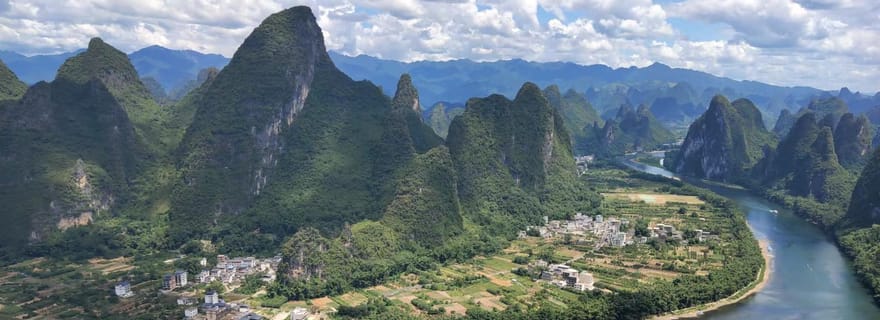
The pointy limestone mountains surrounding Guilin have been depicted in traditional Chinese painting for over a thousand years, remaining among the country's most recognizable landscapes.
A cruise on the Li River remains the classic way to explore the area.
In the city's heart, Elephant Trunk Hill, a limestone formation crossed by a natural arch that resembles an elephant's trunk drinking from the river, remains Guilin's unofficial symbol.
A cruise on the Li River traverses dozens of pointed limestone peaks, the same landscape depicted for centuries in traditional Chinese ink paintings.
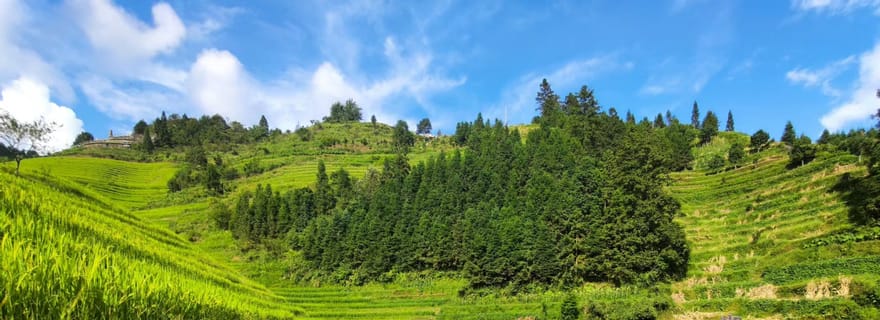
Disembarking at Yangshuo, a small town along the river, rented bicycles allow exploring the rice paddies surrounded by the same peaks seen from the water.
Toward evening, the Reed Flute Caves, limestone cavities illuminated with colored lights, close the day among spectacular stalactites and stalagmites.
The limestone peaks of Guilin, technically called karst towers, formed over millions of years through erosion of ancient seafloor uplifted by tectonic movement.
The Chinese proverb 'Guilin's landscapes are the finest under heaven' already appears in Tang Dynasty texts, evidence of how this scenery's fame predates modern tourism by centuries.
Guided tours and experiences in Guilin City
Related articles

You might also like...
Nanning: the green gateway to Vietnam

Guangzhou in a few hours: tower and canals

Kigali International Airport: where to stay, areas and recommended hotels

Val de Cans/Júlio Cezar Ribeiro International Airport: where to stay, areas and recommended hotels
Yeti Airlines: Air Access to Mountain Airstrips, Including Lukla