Malé: the world's most densely populated capital
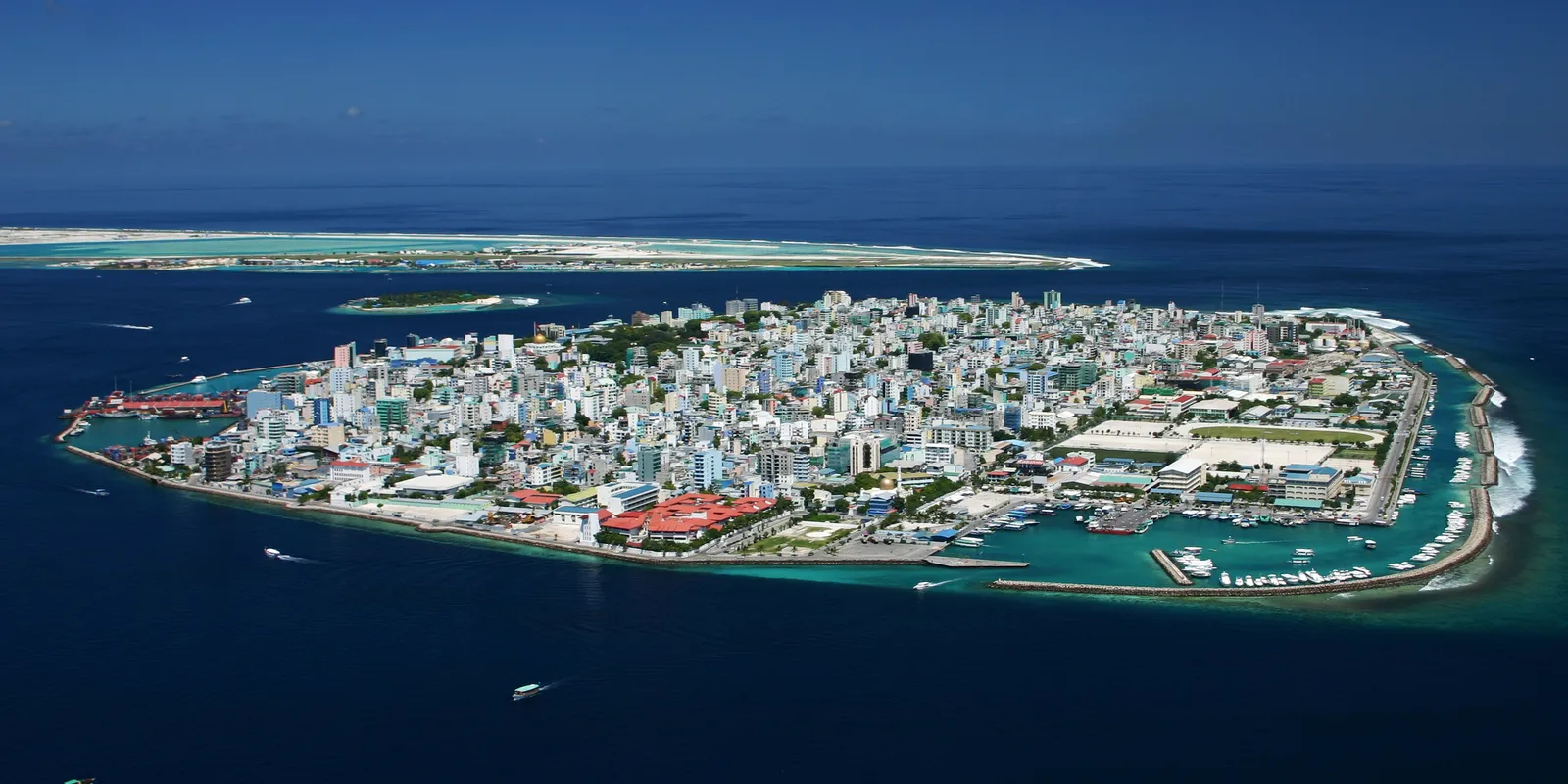
Compressed onto an island of just two square kilometres, Malé is among the world's most densely populated cities, a far cry from the resort island image of the Maldives.
The centre is easily explored on foot in a few hours.
The Friday Mosque, built in white coral in the seventeenth century, remains one of the most important religious buildings of the archipelago, decorated with lacquered wood carvings.
Just steps away, the National Museum of Maldives, housed in the former royal palace, preserves objects of the sultans who governed the archipelago before independence.
Continuing one walks along the waterfront of Malé, the only real green area of the capital, where residents gather during the coolest hours of the day.
Toward evening, the city fish market sells freshly caught tuna, the basis of traditional Maldivian cuisine that has always been connected to the sea.
Malé counts one of the world's highest population densities for a capital, with buildings constructed vertically on every available centimeter of the island, practically devoid of open spaces.
The majority of Maldives visitors spend no more than a few hours in Malé, heading instead toward the coral island resorts reachable only by boat or seaplane.
Guided tours and experiences in Male

Related articles

You might also like...
Thiruvananthapuram: the temple with the hidden treasure
Kochi: the Chinese fishing nets of Kerala

Entebbe International Airport: where to stay, areas and recommended hotels

Sultan Ismail Petra Airport: where to stay, areas and recommended hotels
VietJet Air: How the Vietnamese Low-Cost Carrier Became a Huge Regional Airline