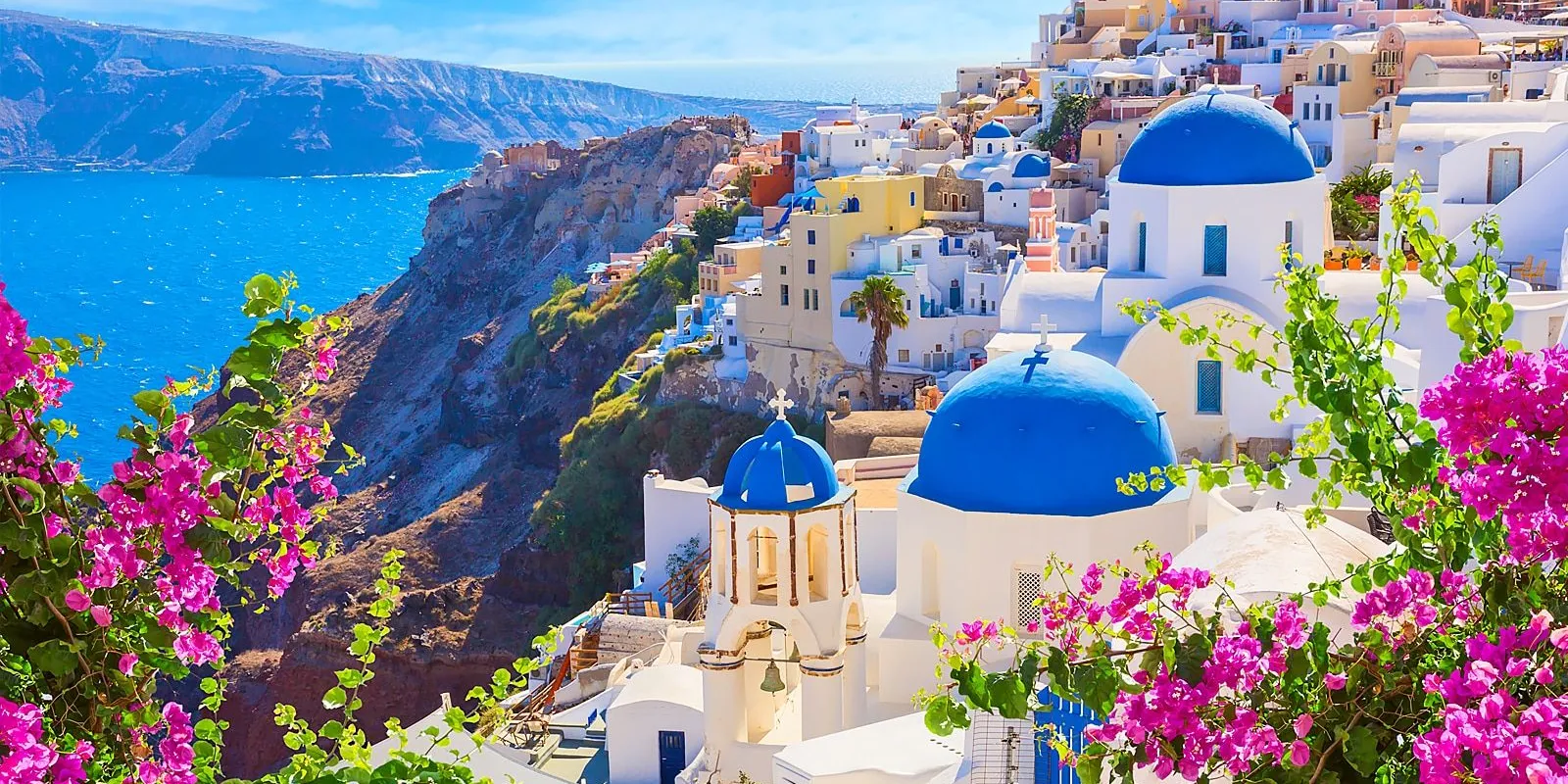

Santorini: sunset over the caldera
Santorini's crescent shape originates from one of humanity's most violent volcanic eruptions, occurred roughly 3,600 years ago and perhaps the origin of the Atlantis myth itself.
Local buses or a rental car connect the various villages along the caldera.
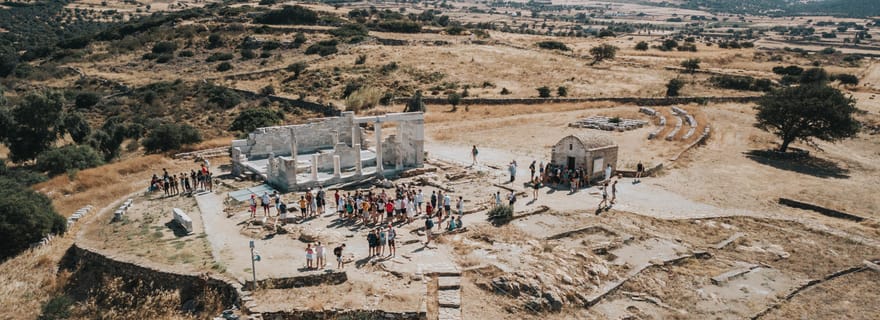
Buried by ash from the Minoan eruption, the Bronze Age settlement of Akrotiri preserves frescoes and multi-story houses in a state of preservation so remarkable that it has been nicknamed "the Greek Pompeii."
Ascending along the caldera you reach Fira, the island's capital built on the edge of the collapsed crater, connected to the port below by hundreds of steps or by a cable car.
Continuing northward, the scenic path that traces the caldera's edge offers glimpses of the sea and still-active volcanic islands at the center of the bay.
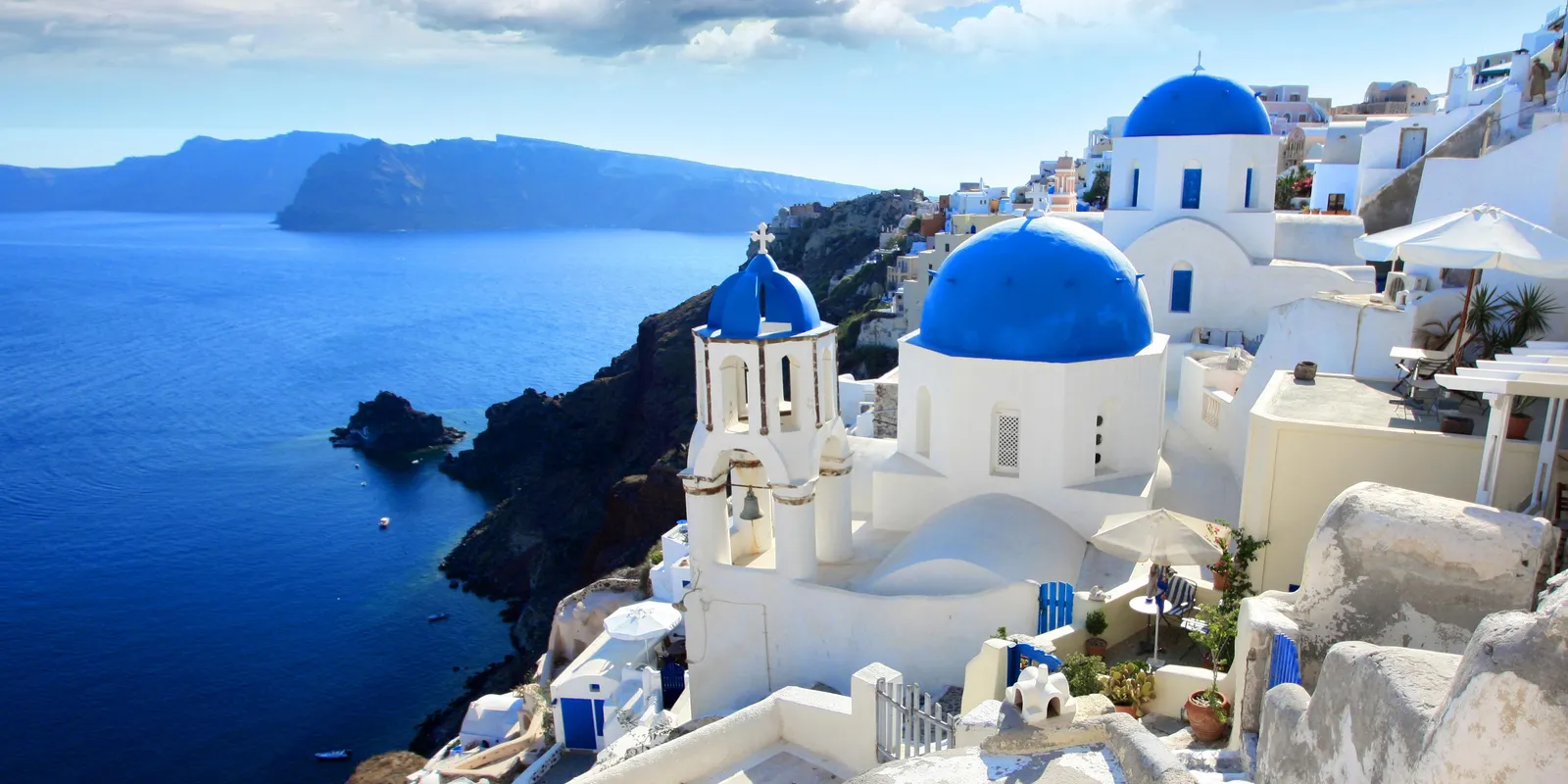
Toward evening you reach Oia, famous for its churches with blue domes and for a sunset considered among the most photographed in the world.
At Akrotiri no human bodies were found among the ashes: the inhabitants seem to have fled in time, perhaps warned by premonitory tremors in the days before the eruption.
In Oia, during summer months, dozens of people crowd onto the same terraces every evening for the same sunset: those seeking more tranquility find nearly identical views, far less crowded, along the rest of the caldera path.
Guided tours and experiences in Santorini



Related articles

You might also like...
Mykonos: windmills and white alleys
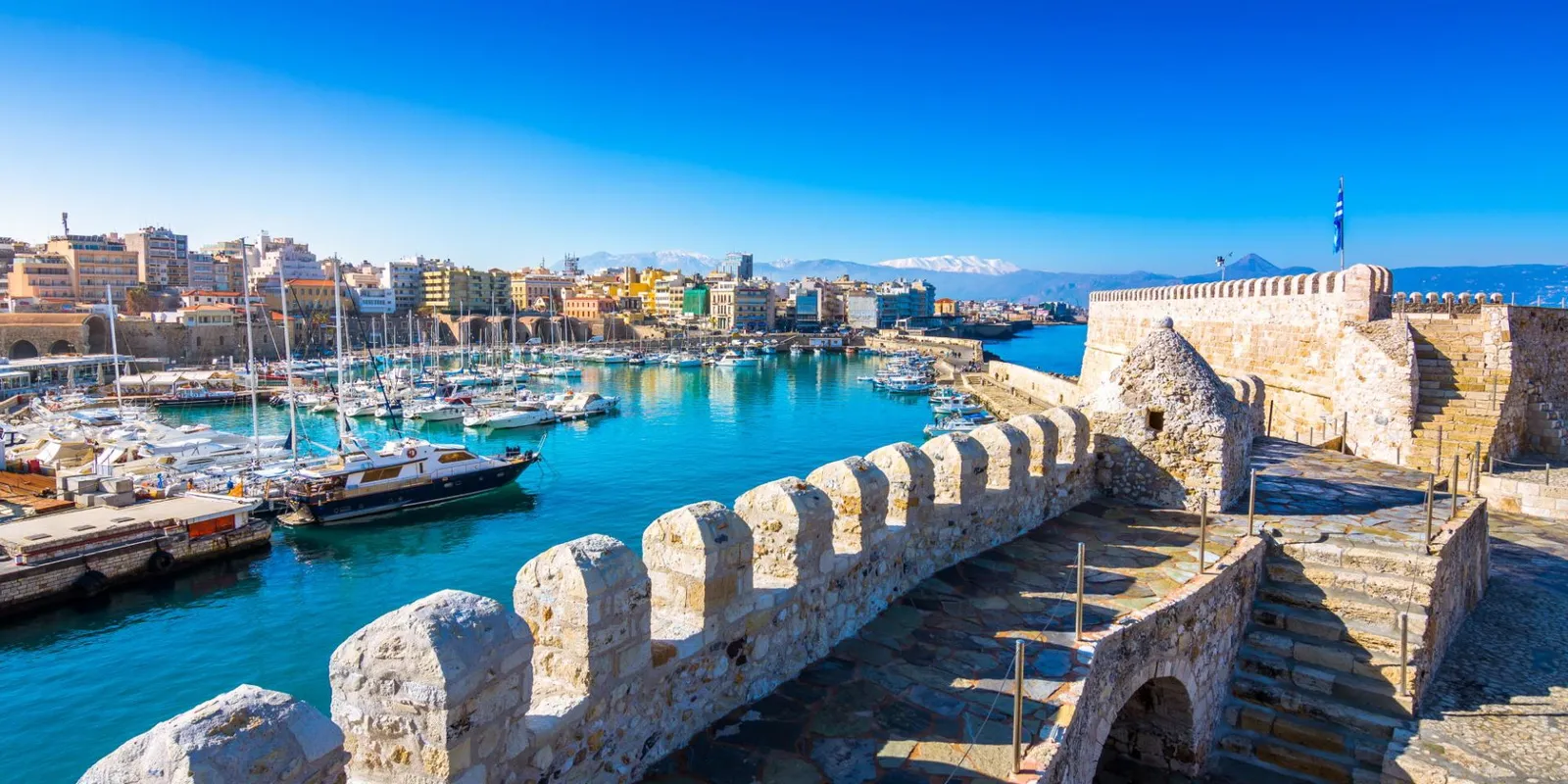
Heraklion: Knossos and the Minoan legacy

Azerbaijan Airlines: What Passengers Say About AZAL Comfort and Punctuality

Danish Air Transport (DAT): The Danish Airline That Also Flies in Sicily and the Marche

Can I bring food in my carry-on?
