Can I bring food in my carry-on?
Solid food travels free in the cabin with no quantity limits: the 100-milliliter rule concerns only liquid or creamy foods, like yogurt, honey, and sauces. The real risk is not at security checkpoints but at the customs of the arrival country, where nations like United States, Australia, and New Zealand prohibit most undeclared fresh foods.
Solid food, no limits at security checkpoints
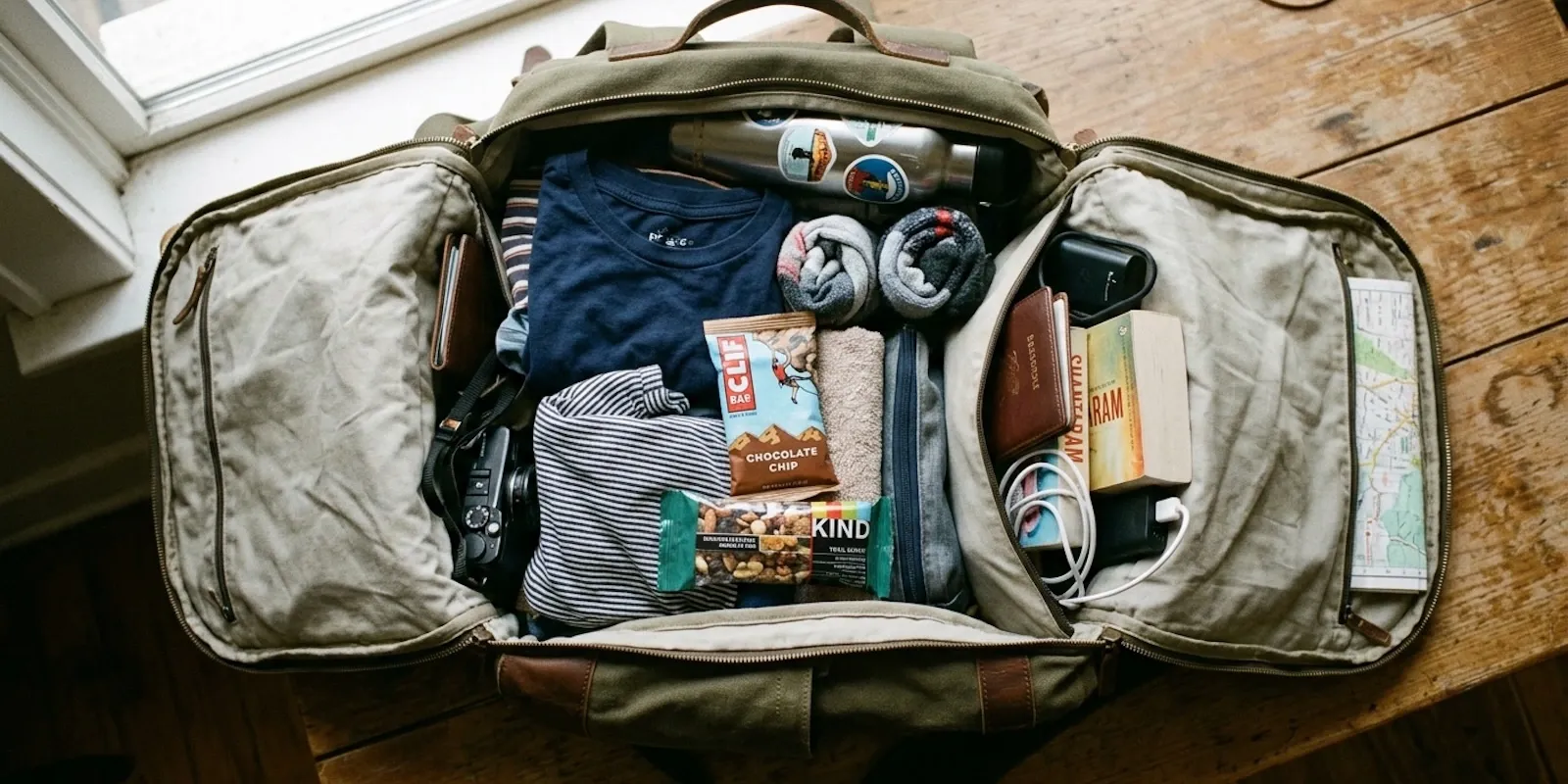
Sandwiches, snacks, dried fruit, cookies, and chocolate bars can travel freely in carry-on baggage: the liquid regulations don't apply to them, whatever the quantity. Bringing something to eat is particularly useful on low-cost short and medium-range flights, where the meal on board, when provided, must almost always be purchased separately. Those with specific allergies or intolerances often prefer their own food so as not to depend on the in-flight service, although many airlines allow requesting in advance special meals (vegetarian, gluten-free, religious).
Yogurt, honey, sauces: when food is treated as a liquid
Yogurt, honey, sauces, soups, soft spreadable cheeses, and very liquid jams fall under the same 100-milliliter rule per container applied to any other liquid and must therefore be placed in the dedicated transparent bag. An exception concerns baby food and infant formula, which can exceed the threshold in reasonable quantities for the duration of the trip: security personnel can nonetheless ask to taste them or test them with dedicated tools before authorizing their passage. Freezing a liquid to bypass the limit doesn't work: a sauce or breast milk meant to thaw during the flight are still treated as liquids and normally confiscated.
Customs rules of the destination country matter more than security checks
Airport security and customs of the arrival country follow opposite logics: the first thinks of bombs and weapons, the second thinks of protecting local agriculture from pests and diseases. United States, Australia, and New Zealand apply very strict controls on the import of meat, dairy, fresh fruit, and seeds: in Australia sanctions for undeclared food start at around 444 Australian dollars for minor violations and can exceed 6,000 Australian dollars in the most serious cases, with the additional risk of visa cancellation. Within the European Union, the free movement of goods simplifies the matter for most common solid foods, but some specific products can still encounter limitations from one country to another.
Duty-free purchases and food souvenirs
Food or beverages purchased at a duty-free shop after security checks can exceed 100 milliliters only if they remain in the sealed bag with visible receipt (the so-called STEB): the exception applies only to direct flights, because a second security check at an intermediate stop may not recognize it. The same applies to food souvenirs like packaged cheeses, cured meats, or typical sweets: airport security poses no problems, but destination customs can still prohibit them or require their declaration.
Before departing with snacks for a child or food souvenirs, check the official customs website of the arrival country — the CBP for the United States, the Department of Agriculture for Australia — instead of discovering at arrival control that that cheese or jar of honey cannot enter.
You might also like...

Arvidsjaur Airport: where to stay, areas and recommended hotels
Expiring passport: can you still travel?

Hamburg Airport: where to stay, areas and recommended hotels
Checked luggage: tricks to avoid it getting lost
Air Tahiti Nui: Routes and Fares of the Tahitian Dreamliners