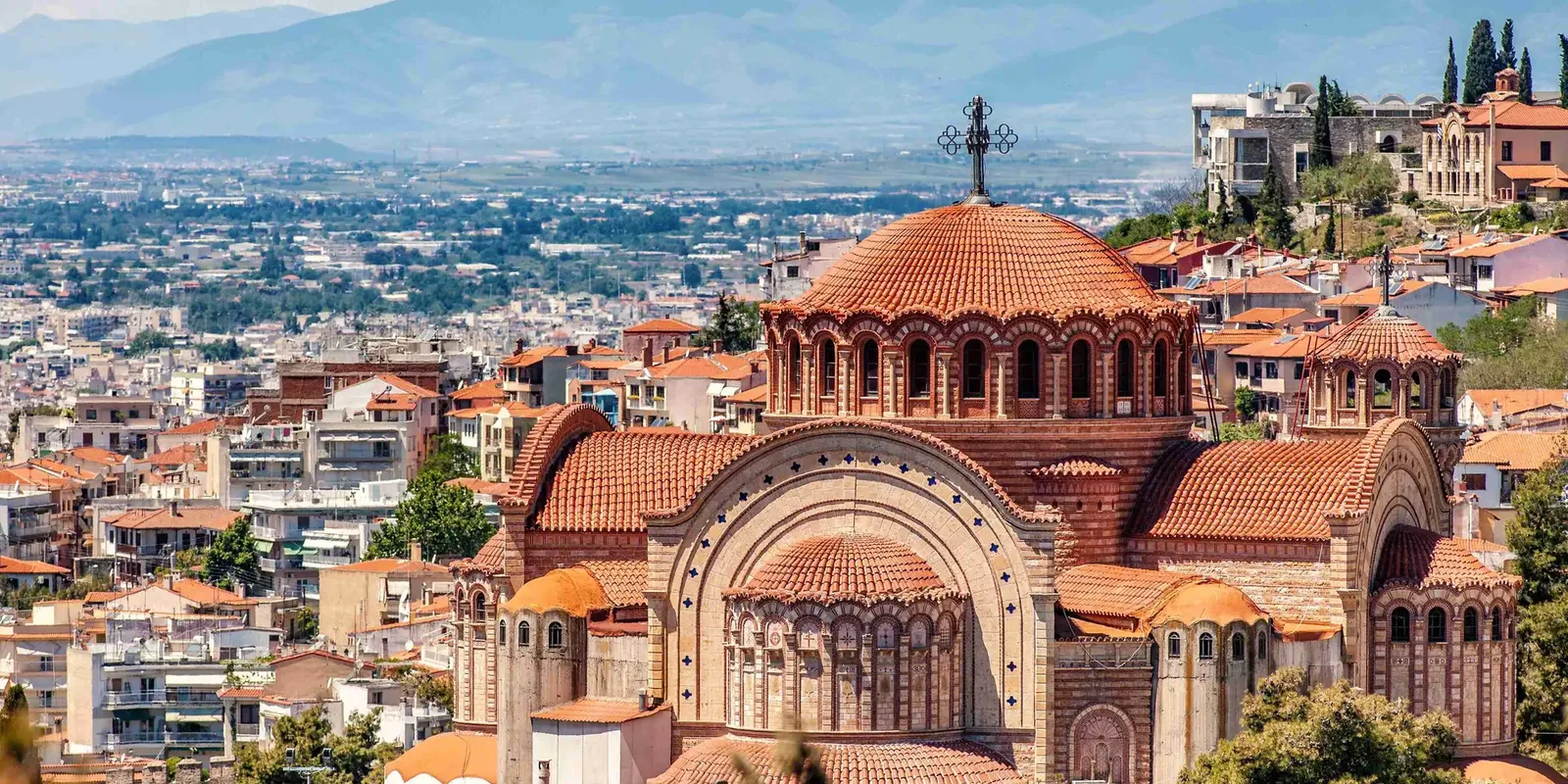

Thessaloniki: Byzantine Greece's second city
Founded in 315 BCE and for centuries the second city of the Byzantine Empire after Constantinople, Salonica preserves some of the best-preserved early Christian churches in the world.
The center, second Byzantine city of Greece, is comfortably explored on foot along the waterfront.
The White Tower, the symbol of the city on the seafront, was built by the Ottomans in the fifteenth century over previous Byzantine fortifications.
A short walk away, the Church of Saint Demetrius, patron of the city, preserves paleochristian mosaics from the fifth century among the oldest in all of Greece.
Continuing on, you visit the Arch of Galerius, a Roman monument erected to celebrate a victory over the Persians in the third century, decorated with still-legible bas-reliefs.
Toward evening, the city's seafront, among the longest and most elegant in Greece, comes alive with cafes and sunset strolls along the Thermaic Gulf.
For centuries, Thessaloniki was one of the most multicultural cities in the Mediterranean, with one of Europe's largest Sephardic Jewish communities before World War II, a heritage still visible in some buildings in the center.
The White Tower took its current name only in the nineteenth century, after being whitewashed to erase its reputation as a prison and execution site from the Ottoman era.
Guided tours and experiences in Thessaloniki
Related articles

You might also like...
Kozani: the fur city of Greek Macedonia
Kavala: the Byzantine port of Greek Macedonia

Choosing an airline: beyond the flight price

Toncontín International Airport: where to stay, areas and recommended hotels
How to handle jet lag after the flight: a practical calendar
