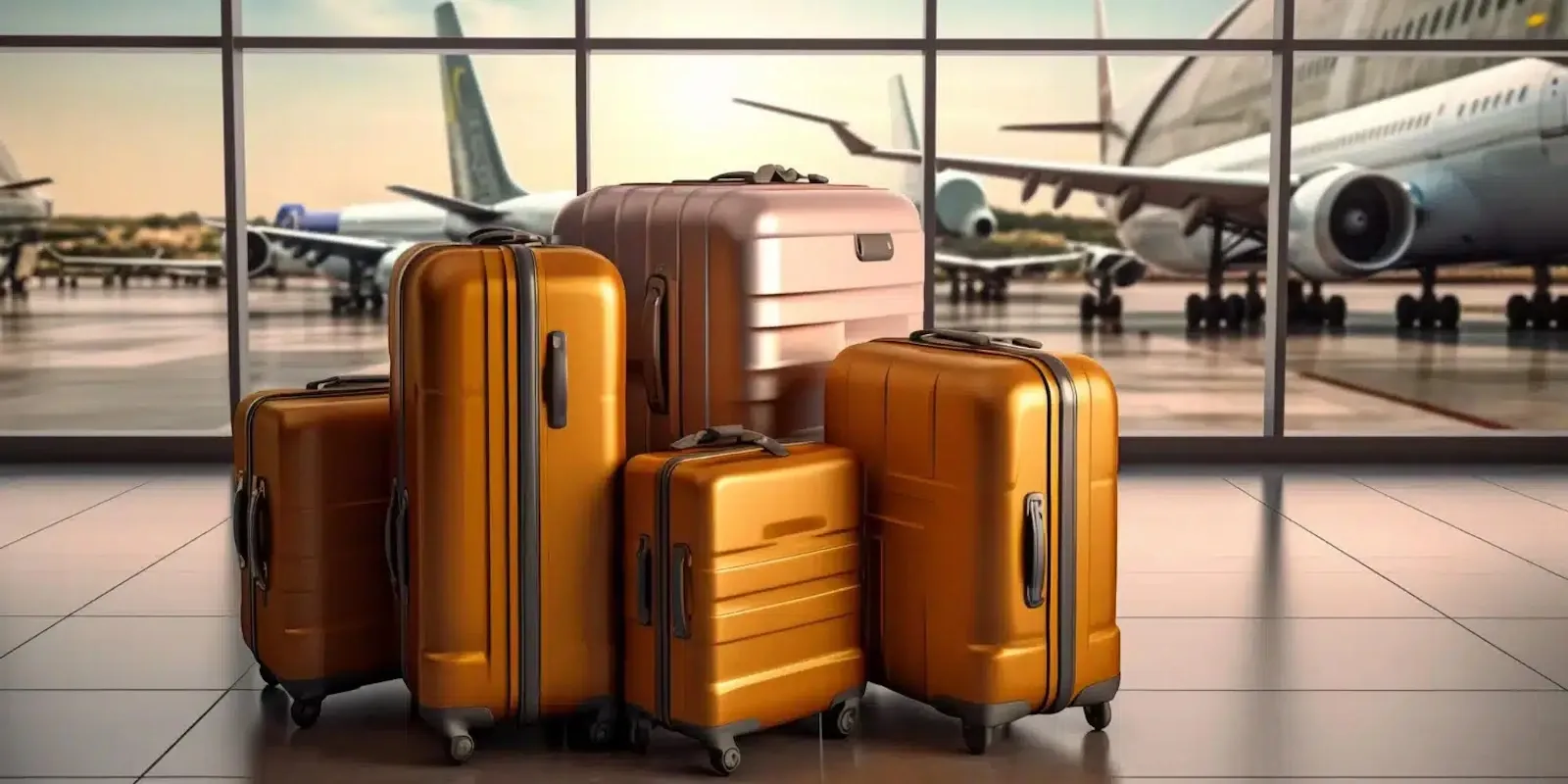
Checked luggage: what to know before you leave
Checked baggage is what carries the most risk without realizing it: a fare that doesn't include it, a few kilos too heavy or spare batteries placed in the wrong location can cost more than the ticket itself or leave you stranded.
Weight, dimensions and the cost of getting it wrong
The limit varies greatly between airline and fare: traditional airlines generally apply 20-23 kg per bag, while low-cost carriers split it more — Ryanair offers checked bags of 15 or 20 kg depending on the fare chosen, easyJet starts at 23 kg standard and allows you to add extra weight in 3 kg increments up to a maximum of 32 kg per suitcase. Before adding an extra bag, it's worth checking for certain whether your fare already includes it, because sometimes it does and nobody notices.
In any case, booking baggage online a few days in advance costs almost always a fraction of what the desk asks on departure day, and the excess weight surcharge can be more than double that difference. Those traveling with family or in groups can often request to combine the total weight of bags associated with the same booking, redistributing kilos between a lighter suitcase and a heavier one without paying surcharges.
What should never go in checked baggage
Documents, essential medicines, jewelry and expensive electronic devices should always stay with you in the cabin: checked baggage passes through more hands and more conveyor belts, and in case of a tight connection it may not keep your same pace. A rule that admits no exceptions concerns spare lithium-ion batteries from power banks, cameras or drones: they cannot be checked in any circumstances and must always be in your carry-on, while those already installed in a device are generally tolerated. Failing to declare them can stop your entire bag for additional manual inspection.
Connections, special baggage and times to respect
With a single ticket and an interline agreement between the airlines involved, the baggage is labeled directly to the final destination; it's still worth asking at check-in, especially if the flight changes airlines halfway through. Those with a very tight connection can request at the desk a priority tag, designed to have the baggage unloaded first: it's not automatic, you have to request it.
Sports equipment, musical instruments and irregularly shaped items almost always require a dedicated rigid case and a specific fee, often only handled through customer service and not through online check-in: find out before you arrive at the airport. Baggage acceptance closing times are generally between 40 and 60 minutes before departure, but vary greatly by airport and airline: arriving at the last minute with a suitcase to check in remains one of the most common ways to get stranded with a valid ticket.
If you have a tight connection, explicitly ask the check-in desk for a priority tag for your baggage: it's not applied automatically, but it can make the difference between picking it up on arrival and waiting for it the next day.
You might also like...

Rome Fiumicino - Leonardo da Vinci Airport: where to stay, areas and recommended hotels

Murtala Muhammed International Airport: where to stay, areas and recommended hotels
Cape Air: From New England to the Caribbean, a Fleet in Transition from Cessna 402s to the New Tecnams
How to avoid getting your suitcase damaged
Lost luggage: liability limits under the law