How to avoid getting your suitcase damaged
A suitcase with a rigid polycarbonate shell resists point impacts better, a soft fabric one absorbs lateral compression better: knowing which risk you're accepting, along with a few precautions in how you pack it, concretely reduces the chances of finding it damaged at baggage claim.
Rigid or soft shell, and the right weight
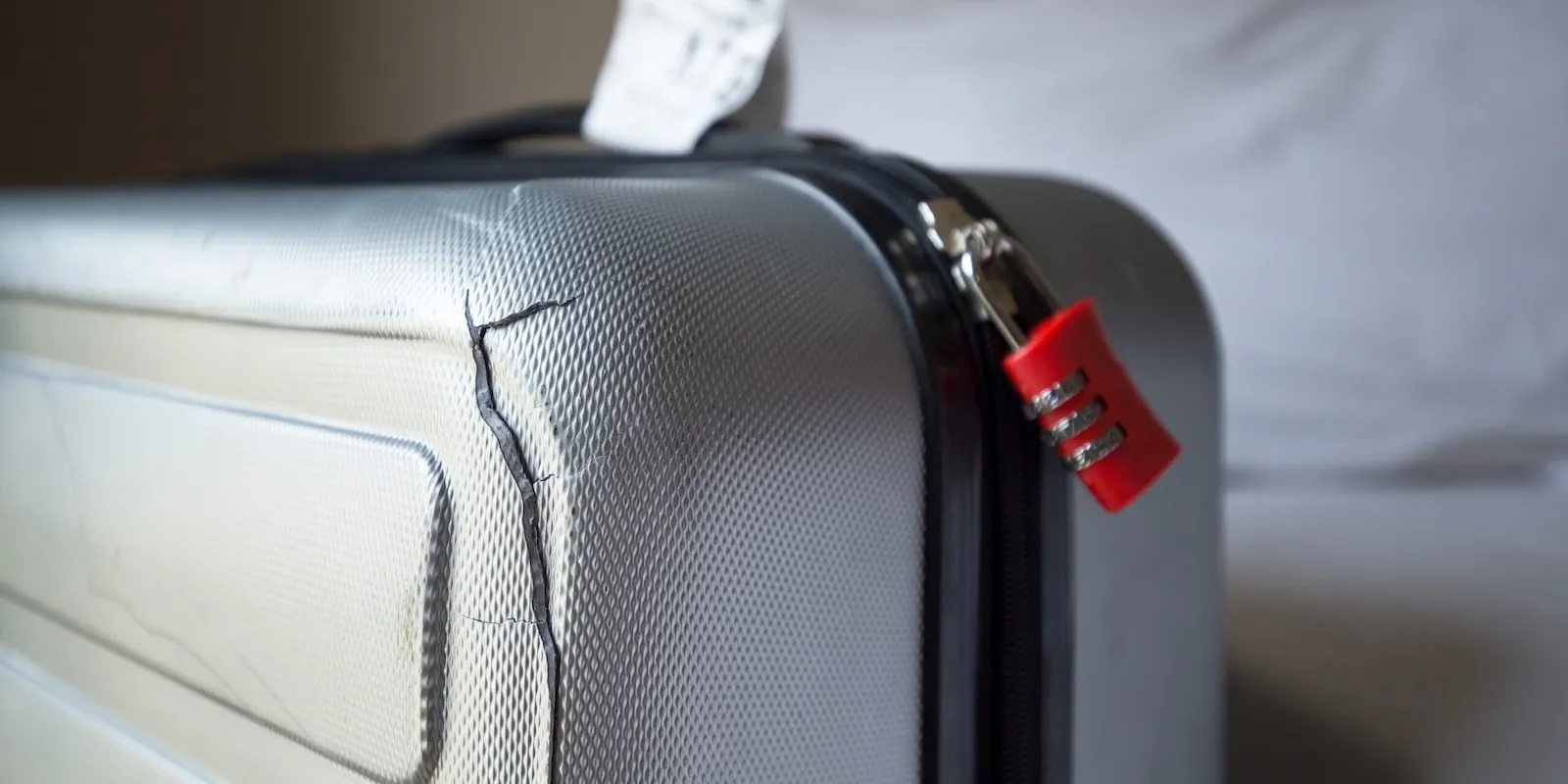
The rigid shell (polycarbonate or aluminum) resists point impacts and vertical crushing better, typical of stacking on airport trolleys; the soft fabric model absorbs lateral compression better but is more vulnerable to cuts and tears along the zippers. Filling the suitcase to the limit, with zippers tight to close, concentrates every jolt of mechanized transport right at the weakest point of the structure: that's where it fails, often during aircraft loading, when no one can intervene anymore. Distributing weight evenly, without concentrating heavy items on one side, also reduces the imbalance that makes the suitcase roll poorly on its wheels.
Straps, corners and wheels: the points that fail first
External straps, often intended to reinforce closure, can get caught in automated conveyor belts and tear along with a piece of the structure: if they're not strictly necessary, better leave them at home. Corners are the most exposed point during manual loading and unloading; there are removable rubber protections designed specifically to reinforce them. Suitcases with four independent swivel wheels, now the norm on mid-range and high-end models, distribute mechanical stress better than old models with two fixed wheels, which concentrate weight and friction on a single axle with each transfer.
Out-of-format baggage and what to do before handing it over
Snowboards, golf bags and large musical instruments should always be protected with a dedicated rigid case: the higher initial cost is almost always paid back compared to the recurring damage of a generic soft bag. A surface scratch on the rigid shell is considered by most airlines a normal consequence of transport, not compensable damage: what matters for a claim is compromised functionality, like a wheel that no longer spins or visibly deformed structure — here you'll find the concrete steps to follow if it happens.
If you frequently travel with sports equipment or bulky instruments, invest in a dedicated rigid case instead of a generic soft bag: over time it costs less than the damage that otherwise occurs on every flight.
You might also like...

Dijon-Bourgogne Airport: where to stay, areas and recommended hotels

Fua'amotu International Airport: where to stay, areas and recommended hotels
Skymark Airlines: How the Japanese Low-Cost Carrier Rescued by ANA Flies Today
Japan Airlines: A Guide to the Airline Reborn After Its 2010 Bankruptcy
Computers and electronic devices at security checks