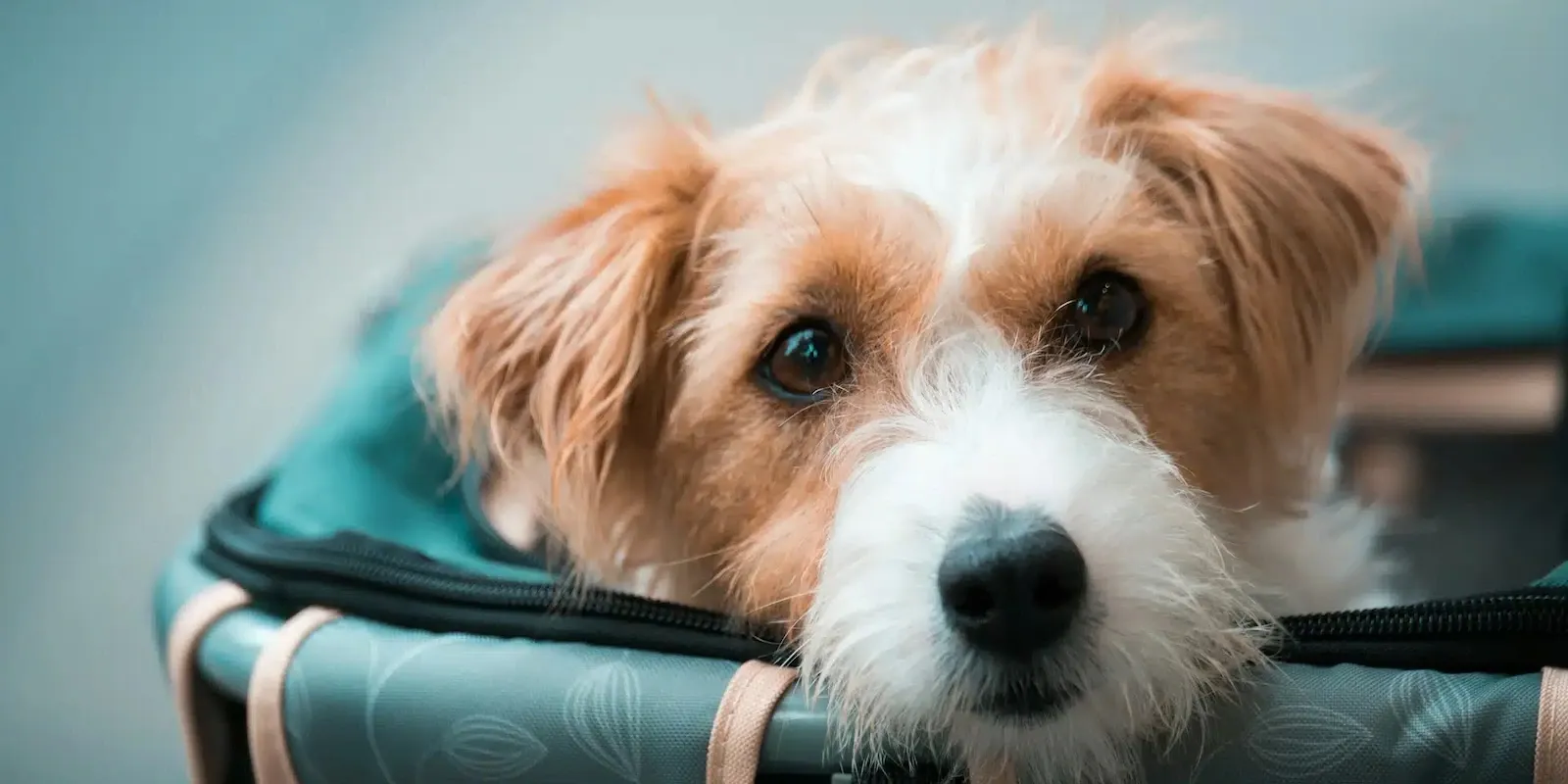
How to prepare your pet for its first flight
Conditioning the pet to the carrier and airport noise, ideally started two or three months before departure, concretely reduces the animal's stress on its first flight.
Getting used to the carrier: associating it with positive experiences
Leaving the carrier open at home, well in advance, and associating it with meals or playtime prevents the pet from perceiving it as a threat. It is the step that deserves the most time investment, as it conditions all subsequent phases of the journey.
Trial outings and sound desensitization
Brief trial outings with the carrier, gradually increasing the duration, accustom the pet to movement and external sounds before the actual experience. Reproducing, at low volume and gradually increased over time, the recordings of typical airport and engine sounds prepares the animal for sounds that would otherwise be completely new to it.
The veterinarian's role: never last-minute sedatives
Any potential natural calming support should be discussed with the veterinarian well in advance and, if truly necessary, never administered for the first time on the day of the flight itself: only a previous trial allows verification of tolerance and the actual effect on the animal.
The most useful practical advice is to start this journey two or three months before departure, not in the last weeks. For the day of departure itself, also see our guide on how to reduce the animal's stress on the day of the flight.
You might also like...
Madagascar Airlines (Air Madagascar): Where the Airline Stands Today
Precision Air: The Tanzanian Airline Tied to Kenya Airways and Its Zanzibar Routes
Flying with your dog: a practical guide
In-flight entertainment: how to never get bored

Iaşi Airport: where to stay, areas and recommended hotels
