Air Serbia: The Etihad Stake and the Network's Growth from Belgrade to the United States
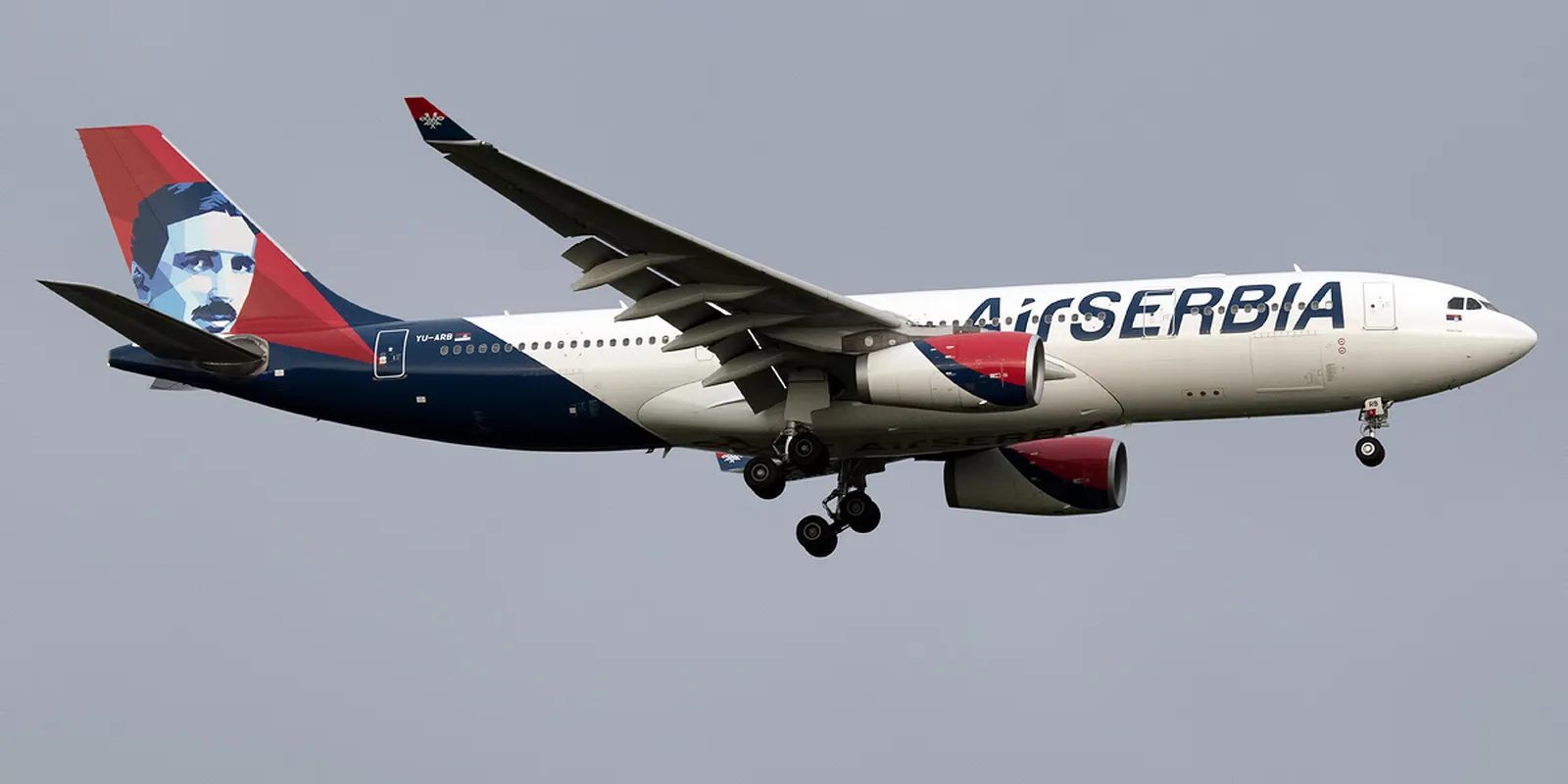
Heir to the historic JAT Airways, Air Serbia has been Serbia's national carrier since 2013, the year Etihad Airways acquired a 49% stake as part of a broader partnership. It is hubbed at Belgrade's Nikola Tesla airport and, thanks to the support of its Emirati partner, has built over the years a network that goes well beyond that typical of a Balkan flag carrier, including intercontinental connections to North America.
The fleet
The fleet combines Airbus A319s and A320s for short- and medium-haul European flying, Airbus A330s for intercontinental routes to North America, and ATR 72s for regional links with lower demand in the Balkans.
History and positioning
The transition from JAT Airways to Air Serbia in 2013 represents one of the most successful cases of rescuing a former Yugoslav flag carrier through a partnership with a Gulf investor, on the model Etihad had already tried with Alitalia (with a far more disastrous outcome) and other smaller European airlines. Unlike those cases, Air Serbia has maintained steady growth in its network and traffic volumes, consolidating Belgrade as a regional hub for the Western Balkans.
Routes and network
From Belgrade the network extends to most of the main European cities and, on the intercontinental front, to New York JFK, one of the airline's flagship routes and a sign of its ambition to position itself as an alternative to the big Western European hubs for passengers connecting from the Balkans to the United States. The regional network in the Balkans nonetheless remains the heart of day-to-day operations.
What passengers say
- Most often reported strengths: excellent value for money on short-haul European routes, and comfort rated above average on intercontinental flights to New York.
- Most often cited limitations: connections that are not always ideal for those continuing beyond Belgrade to smaller Balkan destinations, and baggage handling perceived as slow during the peak summer periods.
Air Serbia is an efficient choice for anyone who needs to connect the Western Balkans with Europe or with the United States via Belgrade, while those looking for the widest possible network of connections should bear in mind that the Belgrade hub, although growing, remains smaller than those of the big European airlines. On routes with a connection in the Balkans, it is wise to allow an adequate time margin between flights, since frequencies to smaller regional destinations are not always numerous during the day.
You might also like...
Azerbaijan Airlines: What Passengers Say About AZAL Comfort and Punctuality
People's Viennaline: The Tiny Austro-Swiss Airline and the Routes It Really Flies

Beirut Rafic Hariri International Airport: where to stay, areas and recommended hotels
Computers and electronic devices at security checks

Benin Airport: where to stay, areas and recommended hotels