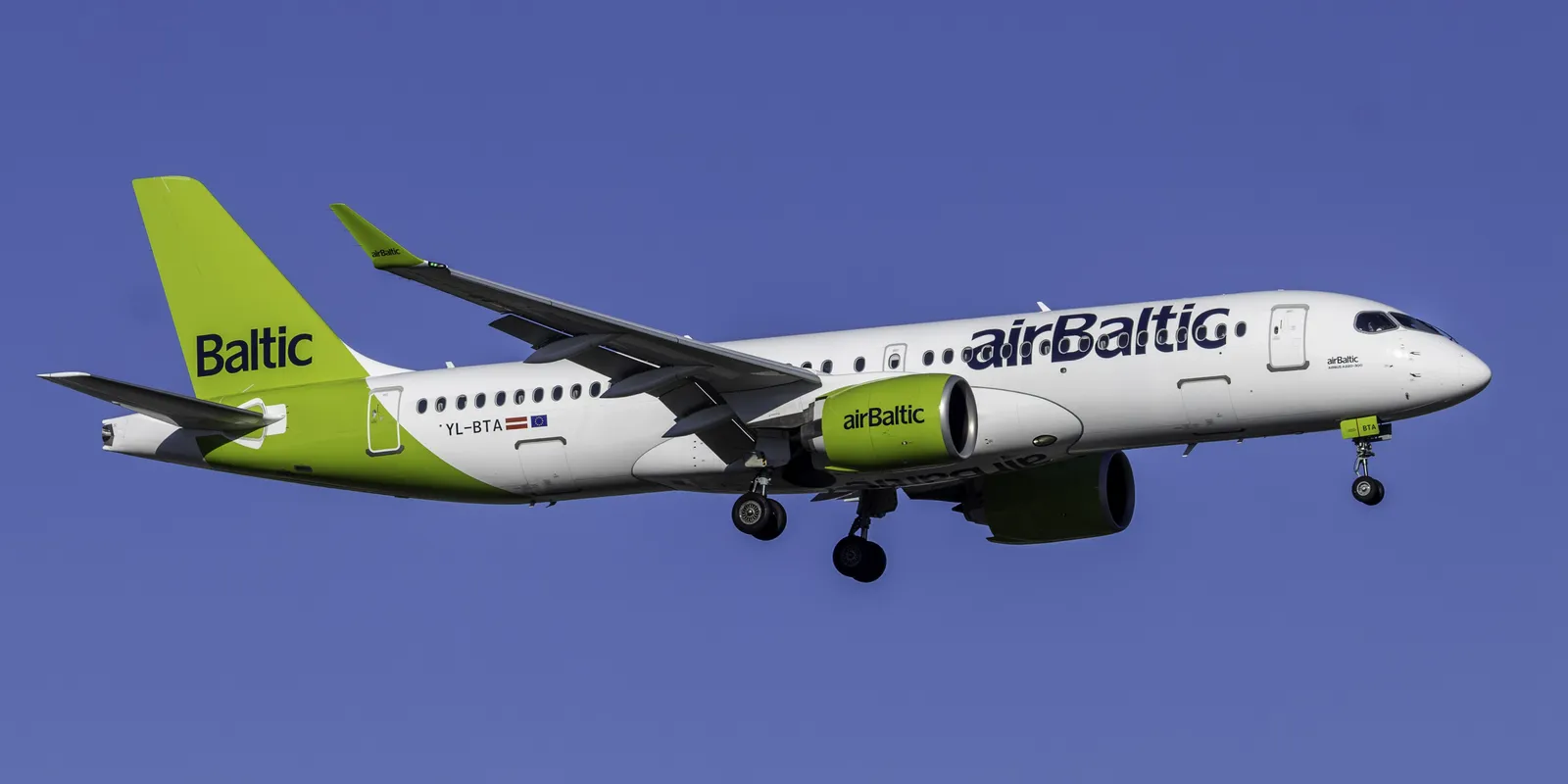
airBaltic: The Latvian Airline That Flies Only the Airbus A220
Standardizing an entire fleet on a single aircraft model is a choice that very few airlines in the world can afford: airBaltic, the flag carrier of Latvia, founded in 1995 and majority state-owned, has done so since 2020 with the Airbus A220-300, becoming its largest European operator, on a network that from Riga reaches dozens of destinations in Europe, Scandinavia, the CIS and the Middle East.
The fleet
The decision to standardize the entire fleet on the Airbus A220-300, completed in 2020, is probably airBaltic's most distinctive industrial decision: a new-generation aircraft, fuel-efficient and with a quieter-than-average cabin, used on both short and medium-haul routes. This uniformity reduces maintenance and crew training costs, a competitive advantage that is far from a given for a mid-sized airline.
History and positioning
Founded in 1995 after Latvia's independence, airBaltic has gradually transformed from a small regional carrier into the reference airline for links between the Baltic and the rest of Europe, keeping Latvian state-controlled ownership while adopting a hybrid commercial model between low-cost and traditional service. In more recent years it has also developed a sizable wet-lease business, renting aircraft and crews to other European airlines in periods of lower seasonal demand.
Routes and network
From the Riga hub, the network extends to dozens of destinations in western and northern Europe, Scandinavia, the Commonwealth of Independent States countries and a few Middle Eastern destinations, with a point-to-point model designed to make Riga a small connecting hub for links between Eastern and Western Europe.
Fares and baggage
The fare model is hybrid: the cheapest base fares exclude checked baggage and seat selection, in line with low-cost carriers, but the higher fare tiers already include baggage, free changes and priority boarding, a multi-level system different from the pure unbundled model of the more aggressive Asian or European low-cost carriers.
What passengers say
The bright side:
- Airbus A220 cabin judged quieter and more comfortable than the average of European short-to-medium-haul fleets.
- Good overall punctuality across the network from the Riga hub.
The shadows:
- A destination network that is still smaller than that of the big European carriers.
- Some delays reported in peak periods tied to the wet-lease business, which commits part of the fleet.
airBaltic is a solid choice for those flying to or from the Baltic countries and wanting to travel on a relatively new, quiet aircraft, as well as for those using Riga as an alternative stopover between Western Europe and Eastern Europe/the CIS. It is less suitable for those who need the widest possible network of direct destinations, since the network remains that of a mid-sized airline. A practical tip: the cheapest base fare does not include checked baggage, so it is worth calculating the total cost with the bag added before comparing it with the all-inclusive fares of other carriers on the same route.
You might also like...

Trieste Friuli Venezia Giulia Airport: where to stay, areas and recommended hotels
Aeroitalia: The ITA Airways Lawsuit, the Growing Fleet and What to Expect On Board

Ástor Piazzola International Airport: where to stay, areas and recommended hotels
Virgin Atlantic in 2026: An All-Widebody Fleet, the Weight of Heathrow and What Passengers Say About Upper Class

Washington Dulles lounges: a concourse-by-concourse guide
