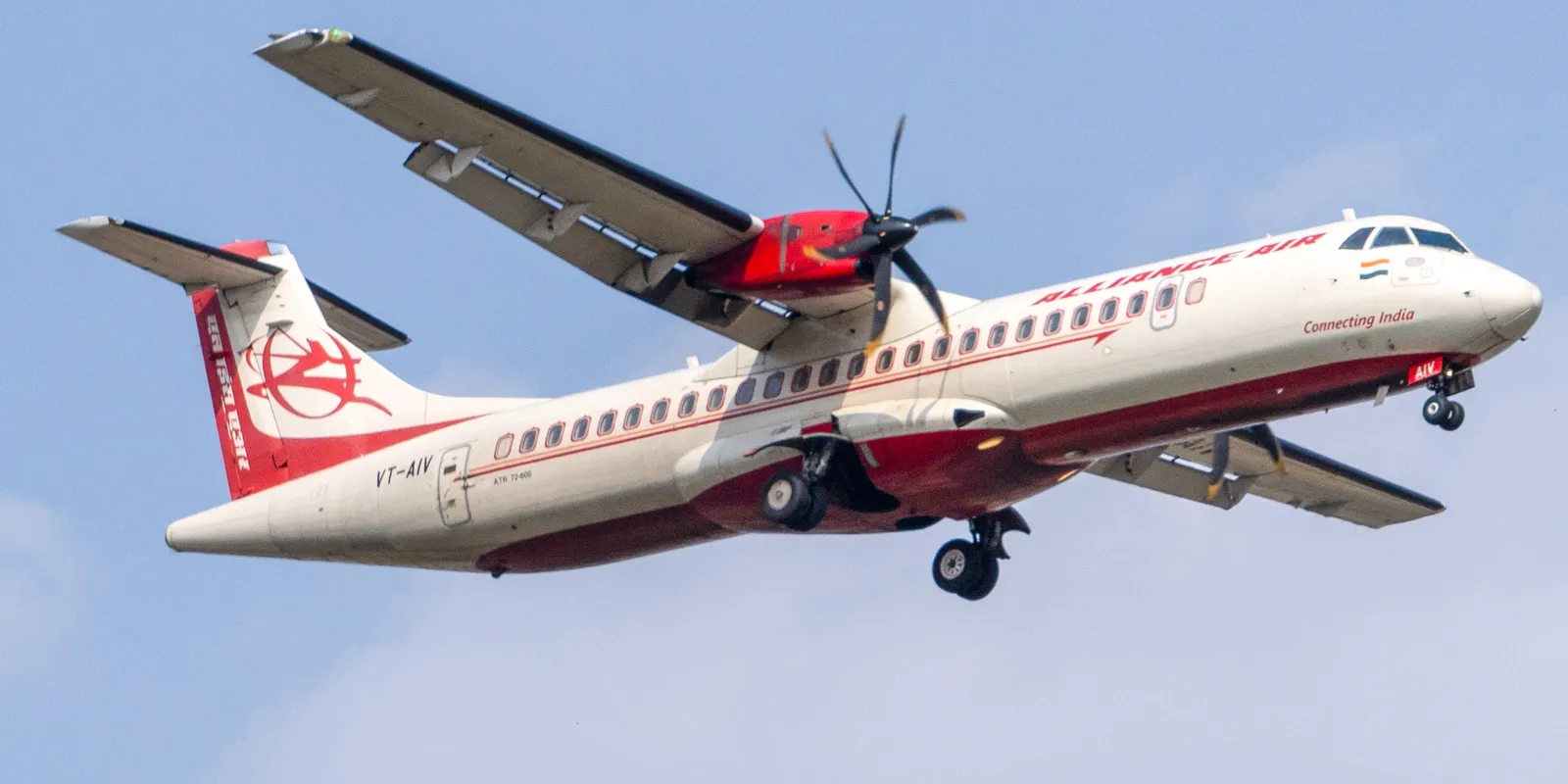
Alliance Air: How the UDAN Network Connecting Deep India Works
Alliance Air is an Indian state-owned airline that became independent from Air India in April 2022, after the privatization of the main carrier. Its role is specific: to operate regional connections to second- and third-tier cities poorly served by the major carriers, under the government's UDAN program (Ude Desh Ka Aam Nagrik) designed to make flying accessible outside the big metropolises as well.
History and positioning
Born as a regional subsidiary of Air India, Alliance Air remained state-owned even after the privatization of the main carrier with the entry of the Tata group, continuing to operate as the public arm of Indian regional connectivity with about 60 daily flights under the UDAN program.
The fleet
The fleet is made up of two ATR 42-600s, eighteen ATR 72-600s and one Dornier 228-200, with a second Dornier on the way for the shortest routes to Himalayan airports with particularly short runways. All the aircraft are leased from four different leasing companies, a structure typical of regional carriers that want to keep the capital tied up in the fleet low.
Routes and network
From hubs spread across Bengaluru, Chennai, Delhi, Hyderabad, Kolkata and Mumbai, Alliance Air served 57 destinations as of May 2024, many of them secondary cities with no direct alternatives from the major national carriers such as IndiGo or Air India.
On board and service
On a fleet of regional turboprops the onboard service remains minimal, with a single class and short flights: the priority of the UDAN program is not comfort but simply guaranteeing that an air link exists where otherwise there would be none.
Alliance Air makes sense for anyone who needs to reach second- or third-tier Indian cities, especially in the Himalayan areas or the Northeast, where the major carriers do not fly or arrive only with multiple stops. It is not the right choice for those looking for the comfort or punctuality of a major scheduled airline, given the operating context on smaller runways often subject to more difficult weather conditions. A practical tip: on these regional routes always leave extra time for possible weather cancellations, which are more frequent than on the main routes between India's big cities.
You might also like...

Almería International Airport: where to stay, areas and recommended hotels

Boarding pass on your phone: what to know before you leave
Kam Air: The Fleet and Routes of Afghanistan's Leading Private Carrier

Split Airport: where to stay, areas and recommended hotels

Dogs on planes: rules and tips for the cabin
