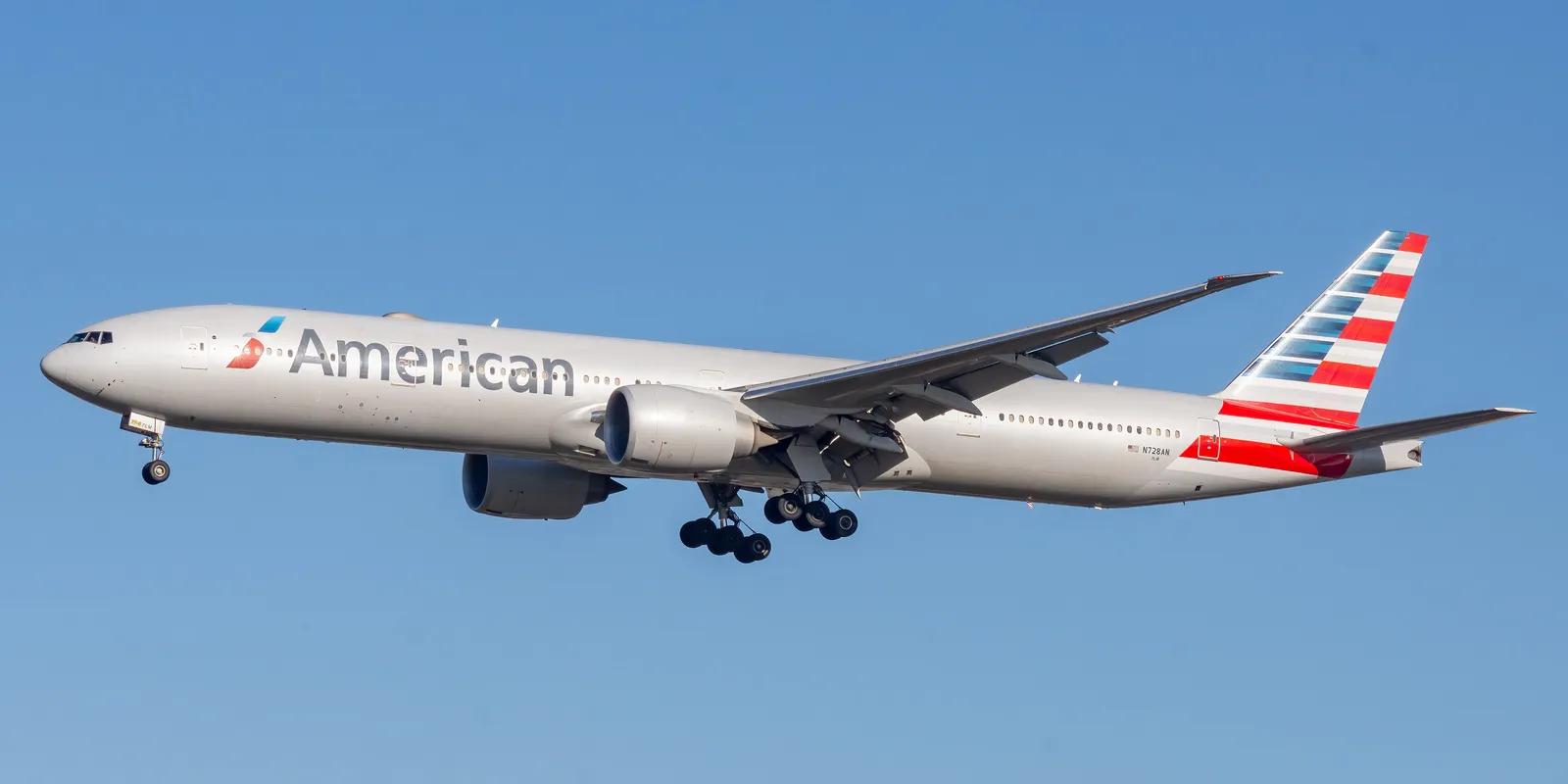
American Airlines: The World's Largest Fleet, the Four Main Hubs and What Passengers Really Say
American Airlines, born in 1930 from the merger of dozens of small US regional carriers, today operates the largest fleet in the world (regional carriers included), with over 1,000 active mainline aircraft. It has been a founding member of the oneworld alliance since 1999 and relies on a network of multiple hubs in the United States, with Dallas/Fort Worth, Charlotte, Miami and Chicago O'Hare among the main points for routing traffic.
History and positioning
Grown for decades through mergers, the latest and most significant of which was with US Airways in 2013, American today maintains the positioning of a general-purpose legacy carrier on a global scale, in direct competition with Delta and United on both domestic and intercontinental routes.
The fleet
The mainline fleet exceeds 1,000 active aircraft, made up of Boeing 737 and Airbus A320/A321 families on short and medium haul, joined by Boeing 777s and 787s on long-haul. To these is added the American Eagle regional fleet, operated by partner carriers, which extends coverage to small and medium-sized cities not reached by mainline flights.
Routes and network
The multiple-hub system - Dallas/Fort Worth, Charlotte, Miami, Chicago, Los Angeles, New York, Philadelphia, Phoenix and Washington - allows American to cover both extensive domestic traffic and intercontinental routes, with a summer 2026 offering that bets on further growth in premium long-haul to central Europe and Asia.
On board and loyalty program
The AAdvantage loyalty program remains among the largest in the world by number of members, with miles that can be spent on all oneworld partners, an alliance that includes top-tier carriers such as Cathay Pacific, Japan Airlines and Qatar Airways, although the lounge network and the service at stopovers outside the United States are judged less uniform than in the other two major global alliances.
What passengers say
Opinions are often split between the domestic experience, judged average for the American industry, and the intercontinental one, which benefits from the quality of the oneworld partners.
- Recurring favorable opinions: a domestic network breadth that other carriers can hardly replicate, access to top-tier oneworld partners for international flights, an AAdvantage program that is flexible on redemption options.
- Recurring critical opinions: service quality perceived as inferior to Delta on comparable domestic routes, uniformity of oneworld lounges outside the United States judged lower than that of Star Alliance and SkyTeam, handling of cascading delays at the big hubs in case of bad weather.
American Airlines is a good fit for those who need the most extensive domestic network in the United States or want to use AAdvantage miles on top-tier oneworld partners for international long-haul. It is a less suitable choice for those who judge only the onboard service on direct intercontinental routes, where the perceived quality often remains below that of Gulf or Asian competitors. Anyone planning a tight connection at one of the big hubs such as Dallas/Fort Worth or Chicago should always allow a longer-than-average time margin, given the volume of traffic concentrated at those airports.
You might also like...

Air Serbia: The Etihad Stake and the Network's Growth from Belgrade to the United States

Bahamasair: The ATR and Boeing Fleet of the Bahamas' Flag Carrier

Frequent flyer programs: how to earn points quickly

Check-in with checked luggage: what changes

Eldoret International Airport: where to stay, areas and recommended hotels