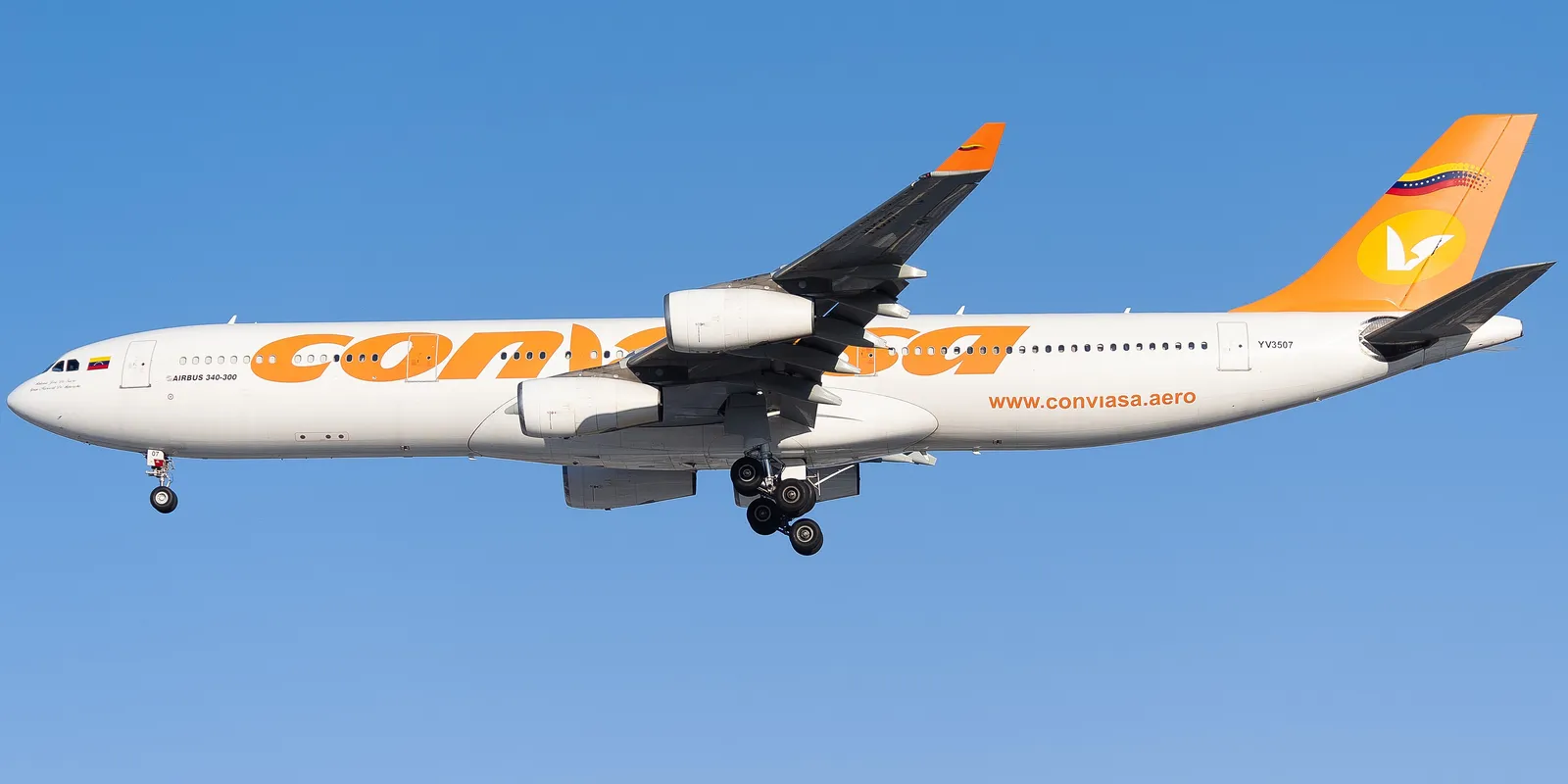
Conviasa Under Sanctions: How Venezuela's State Carrier Still Flies
Conviasa, Venezuela's state carrier founded in 2004, has been hit by repeated US sanctions, including those imposed by OFAC in January 2025 directly against its president, coinciding with Maduro's inauguration for the 2025-2031 term. According to the American authorities, the airline is also used to move figures of the Venezuelan government, and the sanctions limit its access to fuel, aircraft and spare parts.
History and positioning
Created in 2004 to make up for the withdrawal of struggling private Venezuelan carriers, Conviasa has over time absorbed routes and aircraft from sanctioned or failing companies, becoming the government's main air instrument both domestically and diplomatically. The US sanctions imposed over the years have become progressively more direct: in January 2025 OFAC imposed specific measures against the airline's president, coinciding with Maduro's inauguration for the 2025-2031 term, claiming that the carrier is also used to move Venezuelan government figures internationally.
The sanctions directly limit Conviasa's access to fuel, aircraft and spare parts, forcing the airline to seek alternative suppliers outside the traditional Western channels to keep its long-haul fleet operating.
The fleet
For long-haul the airline relies heavily on Airbus A340-600s, supplied through ties with sanctioned Iranian Mahan Air, since Western leasing and spare-parts channels are largely closed to it: a case that shows how the sanctions have changed the airline's suppliers more than stopped its flights, pushing it toward a network of alliances with other states under international sanctions.
Routes and network
Besides the Venezuelan domestic network, Conviasa has built links to sanctioned or allied states: Caracas-Moscow-Guangzhou twice weekly on the A340-600, and a second Russian route, Caracas-Varadero-Saint Petersburg, launched in November 2025, along with historic ties to Cuba, Nicaragua, Iran and Turkey that together make up an atypical international network for a carrier of this size.
What to know before you fly
Because of its sanctioned status, Conviasa cannot be booked or paid for through many Western travel agencies, credit card processors or standard global distribution systems. Foreign travelers, particularly Americans, should check their own country's restrictions before considering an itinerary that involves it even indirectly, for example through a stopover or a codeshare with another carrier.
What regular passengers say
- Venezuelan domestic network useful for those with no direct alternatives on certain internal routes.
- Atypical but real international links to Russia and China, otherwise hard to find on other carriers from the region.
- Complicated booking experience for those starting from a standard Western payment system.
For the Venezuelan government, Conviasa plays a more logistical and diplomatic role than a commercial one in the traditional sense, and most foreign travelers visiting for tourism have no practical reason to book it. Anyone with family ties or professional needs that actually require flying with this airline should first check their own country's up-to-date sanctions guidance, because legal restrictions change faster than the schedule published by the airline itself.
You might also like...

Sihanouk International Airport: where to stay, areas and recommended hotels
Dublin airport lounges: how to choose between the five
Air Moldova: Why the Moldovan Airline No Longer Flies (and What to Know Before Booking)
What documents you need depending on the type of flight
Computers and electronic devices at security checks
