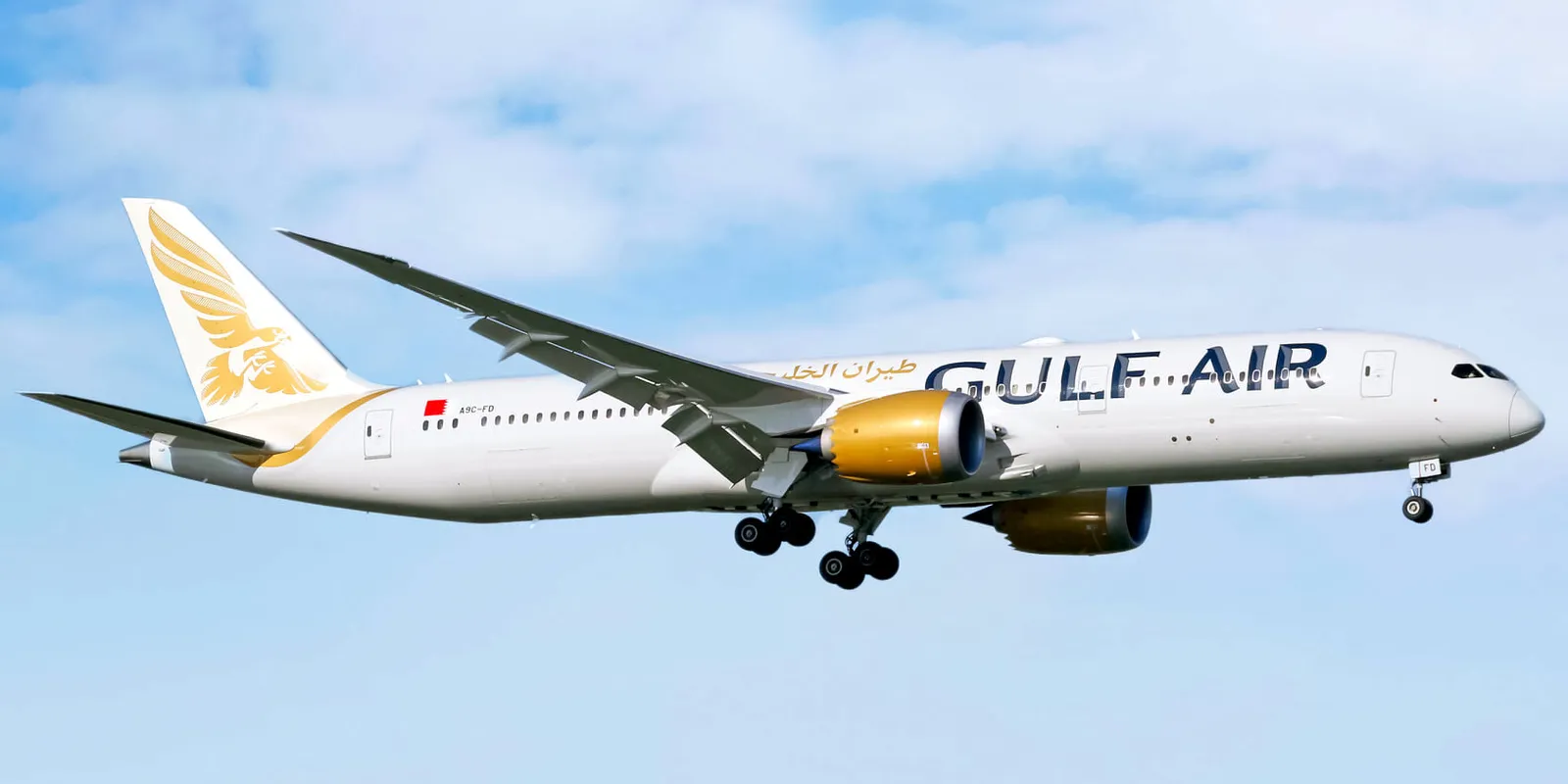
Flying with Gulf Air: Renewed Fleet, Routes from Bahrain and What to Expect On Board
Gulf Air is the flag carrier of Bahrain, founded in 1950 and controlled by the sovereign wealth fund Mumtalakat, with its hub at Bahrain International Airport. In recent years it has gone through a deep fleet renewal, aiming to reposition itself as an upmarket alternative among the big Gulf carriers on routes to Europe, South Asia and the Indian subcontinent.
History and positioning
Gulf Air is the flag carrier of Bahrain, founded in 1950 and controlled by the sovereign wealth fund Mumtalakat. In recent years it has gone through a deep strategic repositioning, aiming to become an upmarket alternative among the big Gulf carriers without competing directly on the volumes of Emirates or Qatar Airways, and instead focusing on a more targeted network toward India, Pakistan and the Middle East.
The fleet
The fleet renewal has brought in the Airbus A320neo and A321neoLR for short and medium-haul regional routes, and the Boeing 787-9 Dreamliner for intercontinental links, gradually replacing the previous-generation A330s and A321ceos. The new cabins include a renewed business class on the Dreamliner, with seats and inflight entertainment clearly superior to the outgoing fleet.
On board and service
The cabin service reflects the airline's upmarket ambition: carefully prepared catering, bilingual Arabic-English cabin crew and a business class product that is competitive for the price asked, especially on routes to the Indian subcontinent, where few competitors offer comparable standards at similar fares.
Routes and network
The network covers the Gulf, the Middle East, Europe and a wide web of routes to India and Pakistan, a market historically central to the carrier thanks to the large presence of South Asian workers in the Gulf. Bahrain serves as a transit hub, although with a smaller destination network than the big competing hubs in the region.
What passengers like
- New cabins on the Dreamliner and A321neo, with seats and inflight entertainment judged clearly superior to the previous fleet.
- A baggage allowance that is generally more generous than some regional low-cost competitors.
- A business class appreciated for value for money on routes to the Indian subcontinent.
What could still be better
- Connections in Bahrain with transfer times that are sometimes tight during peak hours.
- Telephone customer service with long waiting times when changing a booking.
- A destination network that is still smaller than those of the big competing Gulf hubs, with fewer alternative routing options if problems arise.
Gulf Air is a good option for anyone flying to India, Pakistan or the Middle East who wants a modern onboard product without paying the premium of the larger Gulf airlines. It is less suitable for those who need flexible alternative routings in case of problems, since the destination network remains smaller.
If you book a flight with a stopover in Bahrain, check the connection time with a margin of at least two hours: during traffic peaks, getting between gates can take longer than expected.
You might also like...

Salalah Airport: where to stay, areas and recommended hotels

Las Américas International Airport: where to stay, areas and recommended hotels
ITA Airways in 2026: The New Fleet, the Move to Lufthansa and What Passengers Really Say

How to read the terms of a plane ticket

Bahamasair: The ATR and Boeing Fleet of the Bahamas' Flag Carrier