JetBlue Airways After the Failed Merger with Spirit: the JetForward Strategy and What Passengers Say
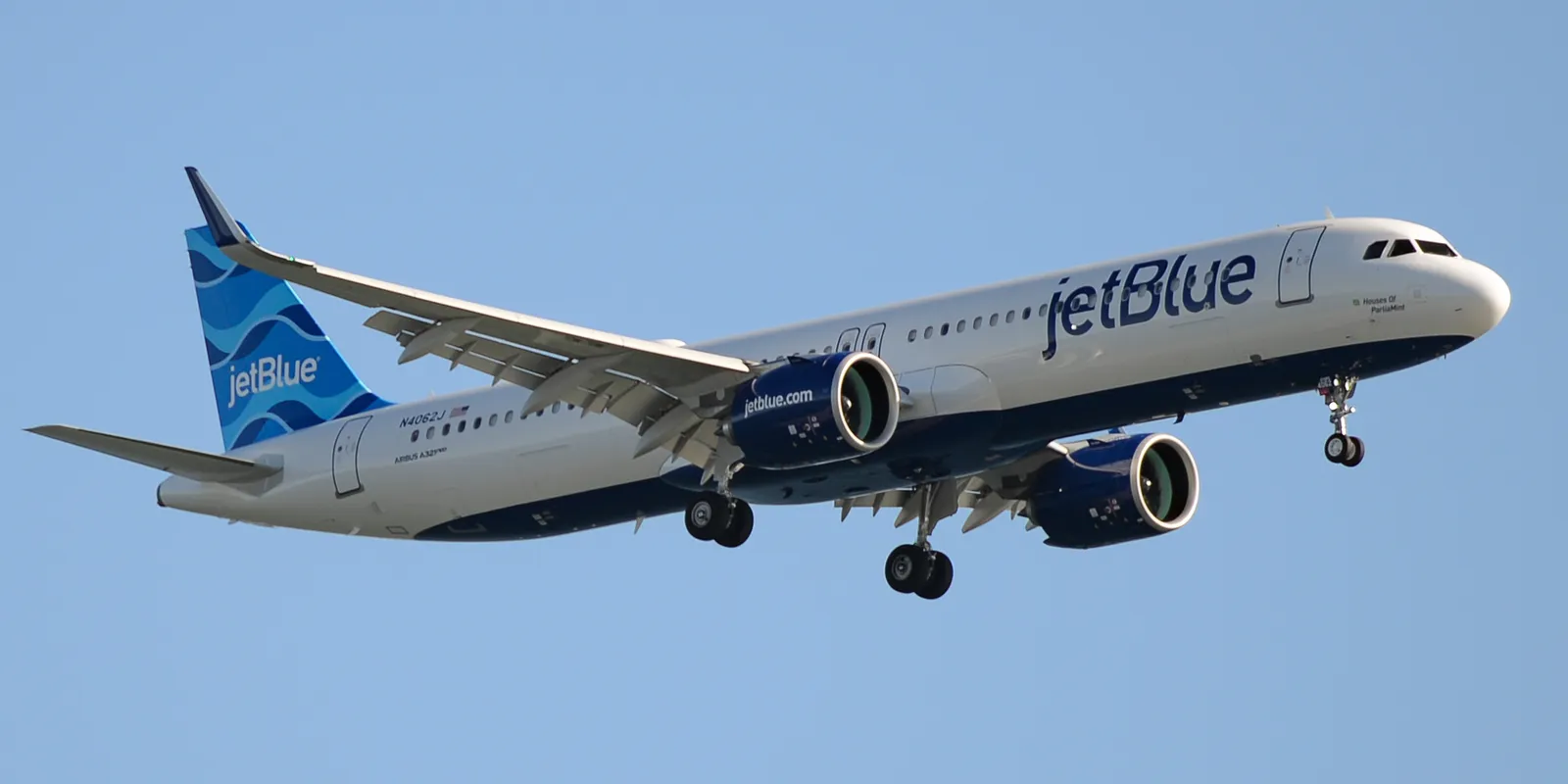
JetBlue Airways is a US carrier founded in 1998 and based mainly at New York JFK, born with a positioning between low-cost and traditional carrier, historically characterized by above-average legroom and free onboard entertainment. After the failure of its attempted merger with Spirit Airlines, blocked by a federal judge in January 2024 and definitively abandoned two months later with a 69 million dollar payment as a termination fee, the airline launched an internal turnaround plan called JetForward.
History and positioning
Created to offer a more comfortable alternative to ultra low-cost carriers without the costs of a legacy carrier, JetBlue has gone through years of losses that pushed management to launch the JetForward strategy, with the goal of generating between 850 and 950 million dollars of incremental annual operating income by the end of 2027. By mid-2026 the plan had already produced 470 million dollars of cumulative benefit, with the airline aiming to return to steady profitability after years in the red.
The fleet
The fleet is made up of Airbus A320s and A321s for short and medium haul, including the longer-range version used on the transatlantic routes to London and Paris, alongside Embraer 190s on lower-demand regional routes.
Routes and network
The network is centered on New York JFK and Boston, with a historically strong presence also in Florida and the Caribbean, as well as a growing number of long-haul transatlantic routes to Europe, a segment on which the airline has bet to set itself apart from domestic ultra low-cost competitors.
On board and loyalty program
The Mint product, the premium cabin with lie-flat seats on part of the A321 fleet, remains the distinguishing element compared with competitors in the same price segment, alongside an Economy cabin that has historically offered more legroom than the industry average and free Wi-Fi on all flights.
What passengers say
Reviews generally remain more favorable than average compared with other mid-market American carriers, albeit in a context of financial uncertainty that worries some industry observers.
- What passengers appreciate: above-average legroom in Economy, a Mint product whose quality is comparable to that of legacy carriers at a lower price, free Wi-Fi across the whole fleet.
- What worries them most: years of consecutive financial losses that fuel doubts about the airline's long-term stability, a smaller network than the big legacy carriers after the abandonment of the merger with Spirit, a recent rise in fuel costs that management flags as a constant pressure on margins.
JetBlue Airways is a good choice for those looking for more legroom in Economy or a competitive Business product with Mint on a transatlantic route, at a price often lower than that of comparable legacy carriers. It is less suitable for those who give top priority to network breadth for connections, since JetBlue remains smaller than the three big American legacy carriers after the failure of the merger with Spirit. If you book a Mint flight, always check which specific aircraft is assigned to the route: only part of the A321 fleet is configured with this cabin, and not all long-haul routes offer it.
You might also like...
WestJet: Fares, Baggage and What It Really Costs to Fly Canada's Airline

São Tomé International Airport: where to stay, areas and recommended hotels
Overbooking: how passenger selection works

Djerba Zarzis International Airport: where to stay, areas and recommended hotels
The New Cyprus Airways: How the Airline Reborn in 2017 Flies Today