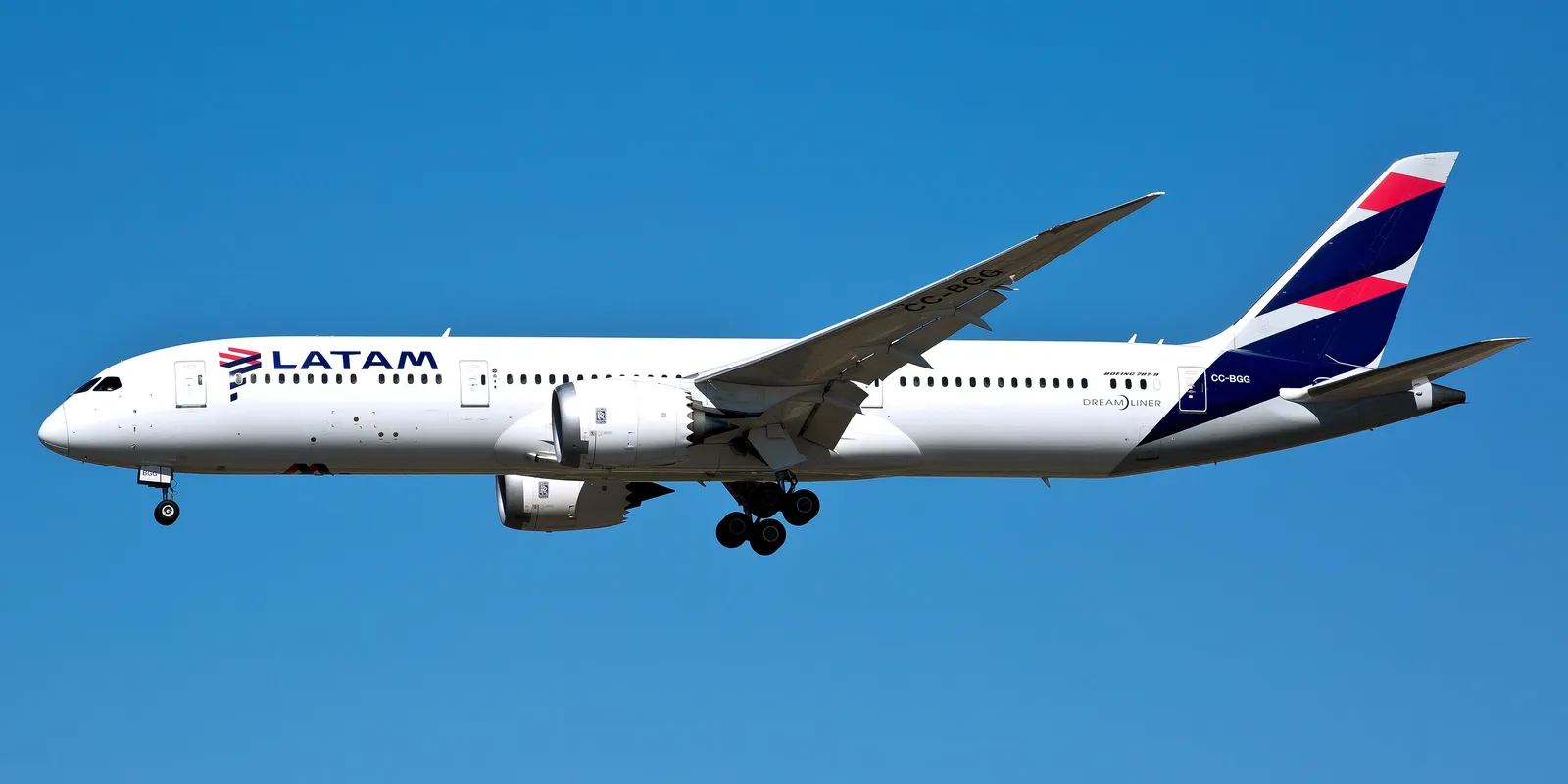
LATAM Chile: Fleet, Routes and the Weight of LAN's Heir in the Group
LATAM Chile descends directly from LAN Chile, founded in 1929 and among the oldest airlines in the world still in operation, privatized in 1989 under the control of the Cueto family. The merger with Brazil's TAM in 2012 created the LATAM Airlines group, of which LATAM Chile is now the Chilean operating certificate, with its hub at Santiago Arturo Merino Benítez Airport and a dominant position in the domestic market.
History and positioning
From a state-owned airline born in 1929 to a private pillar of the largest Latin American airline group, LAN Chile built its identity on trans-Pacific long-haul to Oceania well before the 2012 merger with TAM. Today LATAM Chile works as the Chilean certificate within a multi-country structure that also includes Brazil, Peru, Colombia, Ecuador and Paraguay, sharing codes, loyalty program and commercial strategy with the group's other units.
The fleet
On domestic and regional Andean routes the Airbus A319, A320, A321 and the A320neo generation operate, while international long-haul from Santiago relies on Boeing 767, 777 and 787-8/9 widebodies, shared at group level with the other LATAM units.
Routes and network
The geography of Chile, a very long and narrow country with few fast road alternatives between north and south, makes the domestic network particularly important, and here LATAM Chile holds a largely dominant position. Internationally, Santiago is also the legacy of LAN's historic trans-Pacific vocation toward Auckland and Sydney, along with connections to North America, Europe and the rest of South America, often in connection with the group's hubs in Lima, Bogotá and São Paulo.
Fares and baggage
Fares are organized in tiers (Basic, Light, Plus, Top) with increasing baggage allowance and flexibility, and the LATAM Pass program leverages the ability to earn and spend miles on all the group's routes across the various South American countries, a concrete advantage if you fly often in the region.
What passengers say
The most frequent comparison in reviews is with Chilean low-cost carriers such as Sky Airline and JetSmart: LATAM Chile is seen as the most solid option if you combine domestic flights with an international leg, with a business class on the 787 generally appreciated, while the most commonly reported problems concern operational irregularities linked to staff strikes, a recurring theme in the group's recent history.
LATAM Chile is the most logical choice if you need to combine one or more Chilean domestic flights with a long-haul international flight on the same ticket, taking advantage of connections within the group. It is not the cheapest choice if you only fly within Chile and want the absolute lowest price: on that front the local low-cost carriers are often more competitive. The practical tip is to sign up for LATAM Pass before booking even a single domestic flight: points accumulate across the whole South American group's network and come in handy for redemption on a later intercontinental flight.
You might also like...

Chania International Airport: where to stay, areas and recommended hotels
ITA Airways in 2026: The New Fleet, the Move to Lufthansa and What Passengers Really Say

Baggage tag: what to write and where to put it

Airfares: what the different classes really include
People's Viennaline: The Tiny Austro-Swiss Airline and the Routes It Really Flies
