
Canberra: the capital born on paper
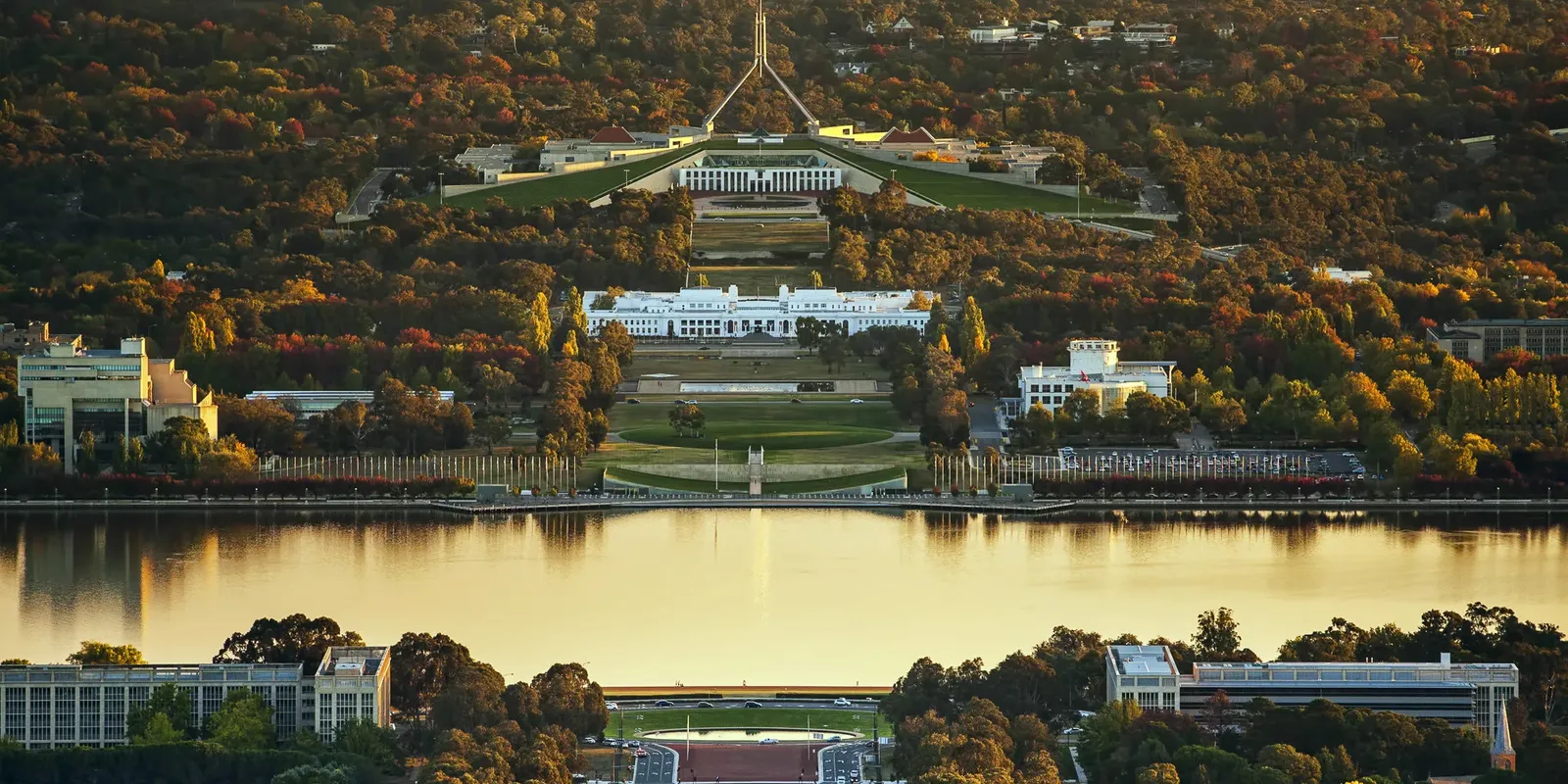
Chosen in 1908 as a compromise between rival Sydney and Melbourne, Canberra was designed from scratch by American architect Walter Burley Griffin around an artificial lake that still bears his name.
The distances between government districts require a car or bus.
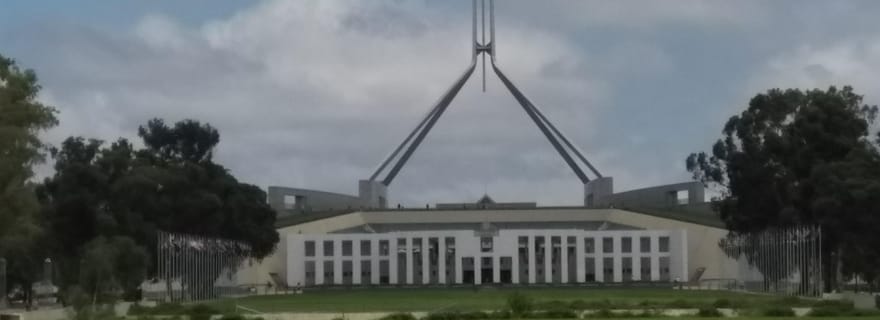
The Parliament House, inaugurated in 1988, is built beneath an artificial hill covered with grass that visitors can walk over, crowned by a flag supported by an eighty-meter-tall truss.
The Australian War Memorial combines a museum on Australian military history with a commemorative sanctuary where every evening a ceremony is held honoring a single fallen soldier, a different one each day of the year.
The National Gallery of Australia holds the world's largest collection of Aboriginal and Torres Strait Islander art, along with works by Monet, Picasso and Jackson Pollock.
The Lake Burley Griffin, an artificial reservoir created by damming the Molonglo River, reflects from its shores both Parliament House and the Carillon, a bell tower donated by the United Kingdom for the city's fiftieth anniversary.
Very few capital cities in the world have been chosen purely as political mediation between two rival cities, yet Canberra has built around that choice of compromise an entirely unique architectural identity.
From Parliament House, literally buried beneath a grass-covered hill, one perhaps perceives better than any other detail how much that original planning aimed at discrete power rather than monumental power.
Guided tours and experiences in Canberra
Related articles

You might also like...
What to see in Sydney in 1 day
Melbourne between art lanes and gardens

A Coruña Airport: where to stay, areas and recommended hotels
Fiumicino lounges: which to choose before departing
Argyle International Airport: where to stay, areas and recommended hotels