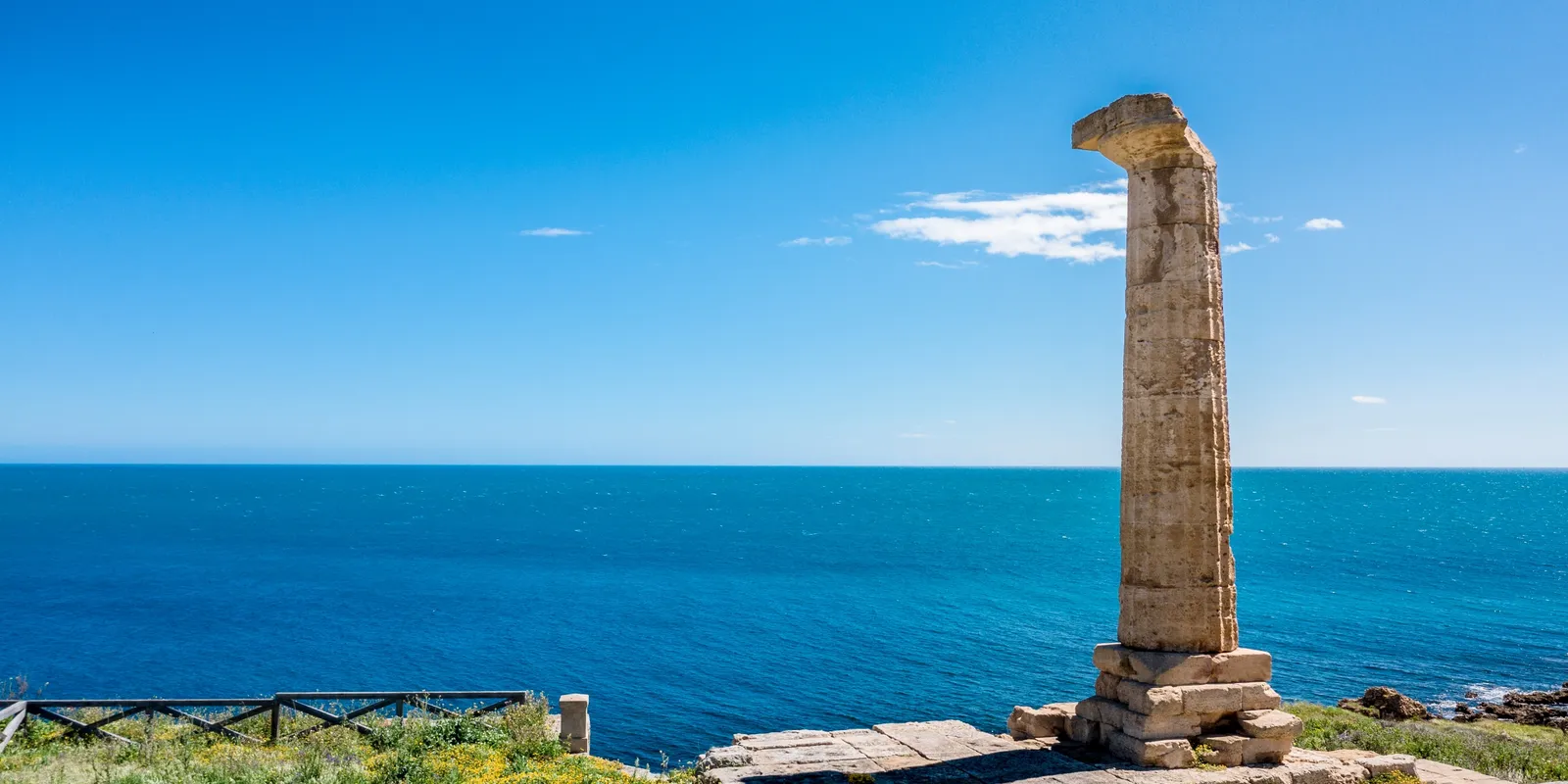

Crotone: the last column of the temple of Hera
Here Pythagoras founded his philosophical school in the sixth century BC: today only a single column remains standing of one of Magna Graecia's most important temples.
The center is visited on foot; for Capo Colonna a car is needed.
The National Archaeological Museum of Crotone gathers artifacts from the Greek colony of Kroton, among the most powerful and wealthy of all Magna Graecia.
Just steps away, Charles V's Castle, expanded in the sixteenth century to defend the port, still dominates the city center with its massive walls.
Continuing along the coast, you reach Cape Colonna, where a single surviving Doric column marks what remains of the great Temple of Hera Lacinia, once featuring forty-eight columns.
Toward evening, the city's waterfront concludes the day with a view of the same sea navigated by Greek merchants more than twenty-five hundred years ago.
The Temple of Hera Lacinia was so well-known in the ancient world that it served as a navigation landmark: Greek sailors spotted it from great distances before they could even see the coast.
Pythagoras founded a school in Crotone that combined philosophy, mathematics, and rules for daily living, influencing Western thought for centuries after his death in the city.
Related articles

You might also like...
Lamezia Terme: what to see in 1 day
Reggio Calabria: the Riace Bronzes

Baggage included in the ticket: how to verify it for sure

Foggia Gino Lisa Airport: where to stay, areas and recommended hotels

Surinam Airways: The Only Direct Flight Linking Suriname to Europe
