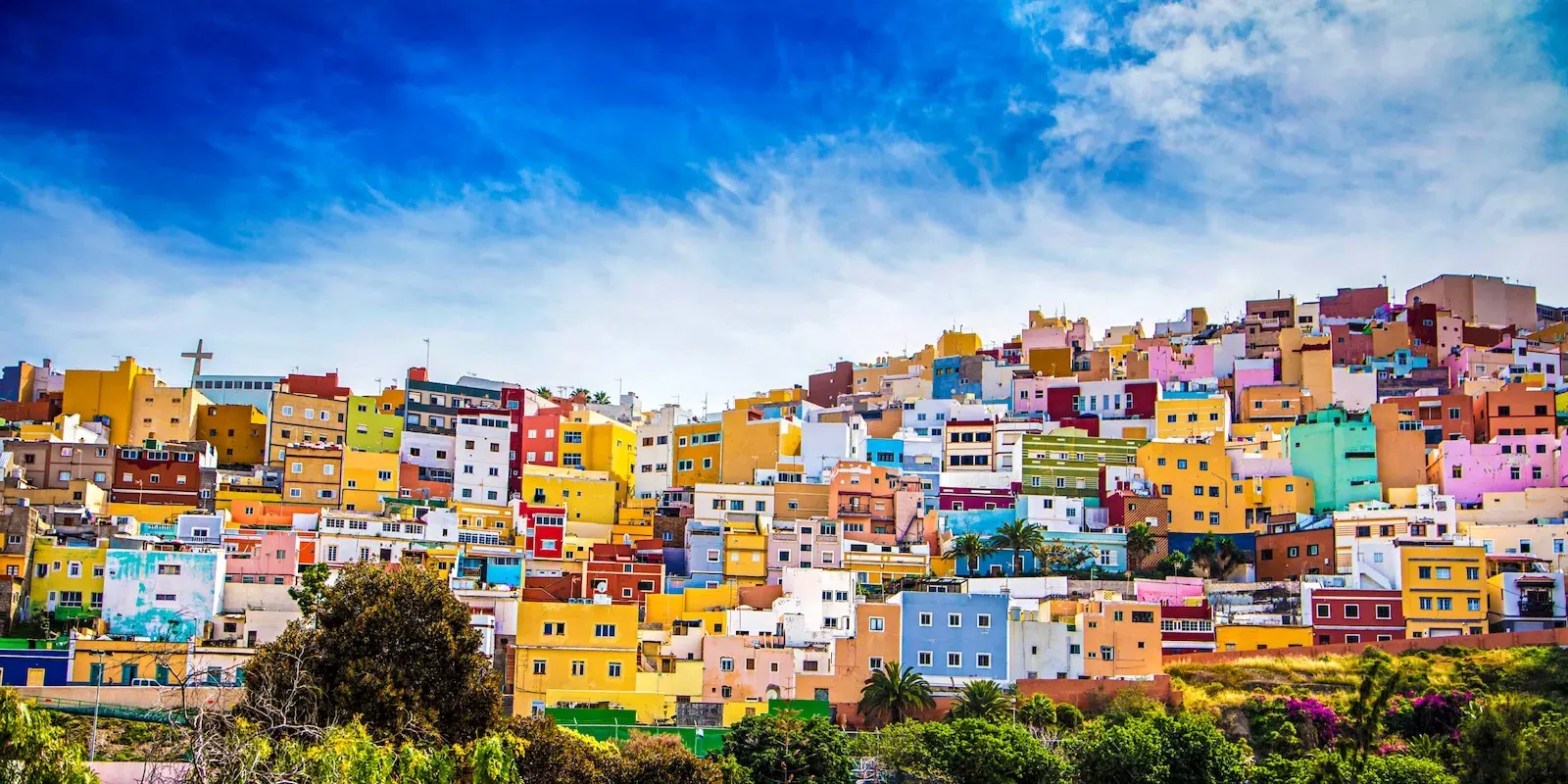
Gran Canaria: Las Palmas between beach and history
Las Palmas de Gran Canaria, the island's capital, combines one of Europe's longest urban beaches with a colonial quarter through which Christopher Columbus passed before his 1492 Atlantic crossing.
A local bus conveniently connects the historic center to the main beach.
The Playa de las Canteras, almost three kilometers of sand protected by a natural rocky barrier making it swimmable year-round, faces directly onto the city waterfront without interruption with the downtown.
The Vegueta neighborhood, the city's founding nucleus dating to 1478, preserves colonial houses with patios in Canarian style surrounding the Cathedral of Saint Anne, the oldest in the Canary Islands.
The House of Columbus, the residence of the governor where local tradition holds Christopher Columbus stayed before sailing, displays today historic maps and objects tied to the age of great explorations.
The Canary Museum, dedicated to the culture of the Guanche, the indigenous population of the island before Spanish conquest, preserves mummies and skulls still used today for studies on their Berber origin.
Between the Guanche mummies of the Canary Museum and the House of Columbus lies less than a century, yet they represent two worlds that the 1492 crossing brought into contact forever.
The Playa de las Canteras, indifferent to both eras, remains the point where the city stops telling its own story and simply returns to living the present.
Guided tours and experiences in Gran Canaria



Related articles


You might also like...
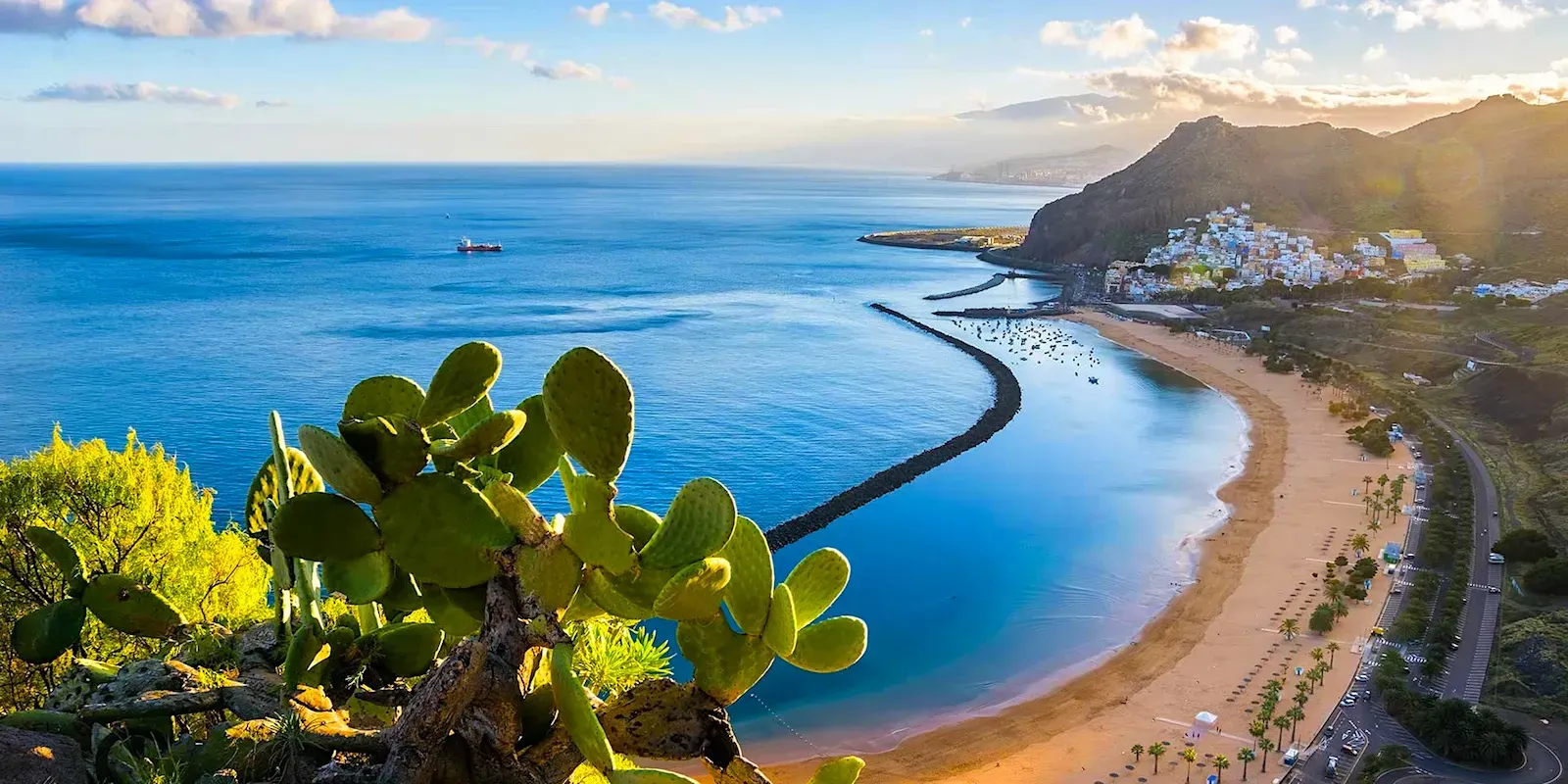
Tenerife: from Teide to the old town of La Laguna
Fuerteventura: dunes and inland villages

Philadelphia: how to navigate American's lounges and the rest

Mazar I Sharif Airport: where to stay, areas and recommended hotels

How to find your way around a large airport