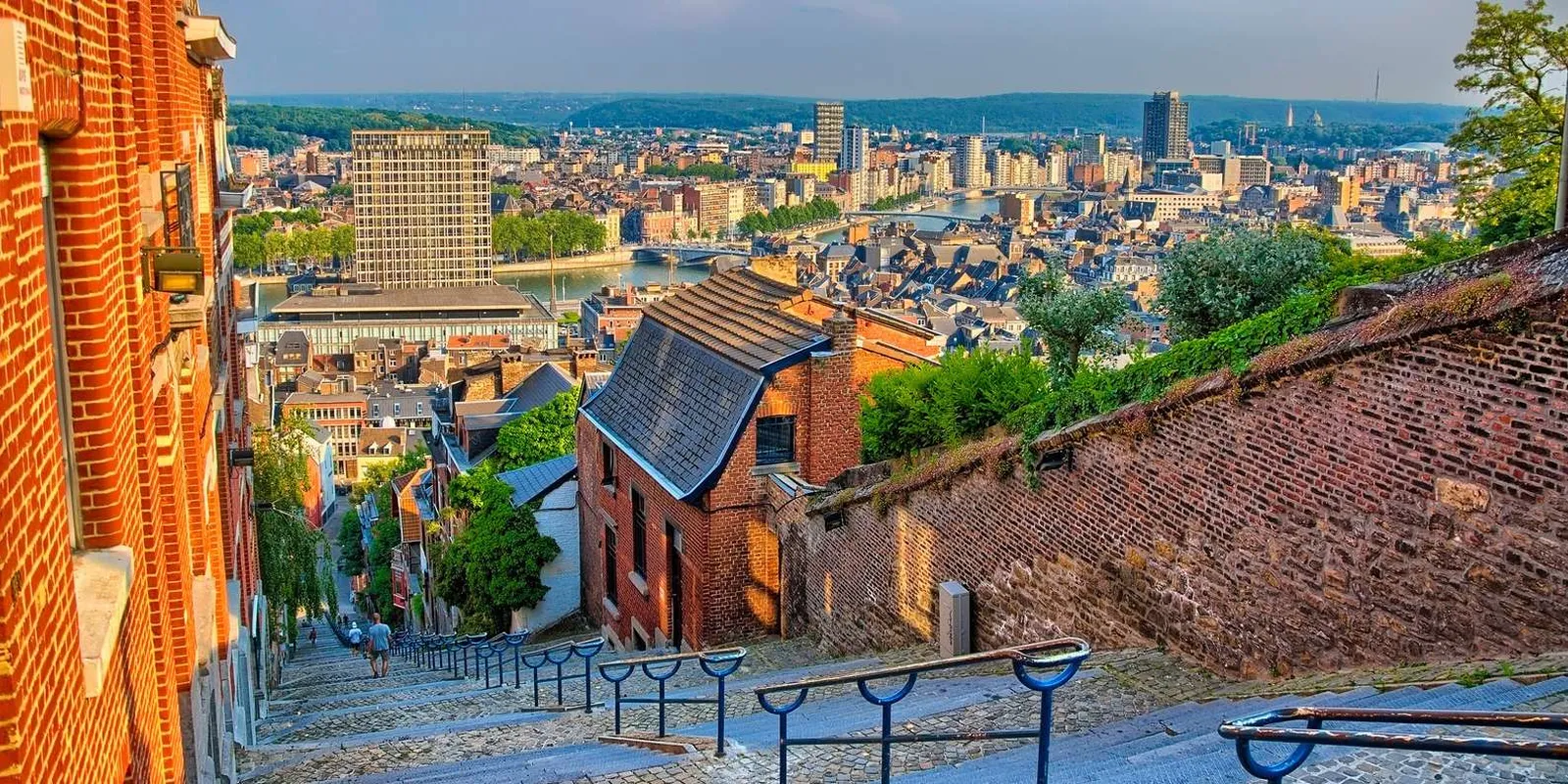

Liège: the rebellious city on the Meuse
A historic industrial city in Wallonia, Liège overlooks the Meuse with a restored historic center featuring some of Belgium's most visited Christmas markets.
The center, historically rebellious, can be comfortably visited on foot along the Meuse.
The staircase of Montagne de Bueren, with its three hundred seventy-four steps, connects the centre to the citadel that dominates the city from above.
A few steps away, the Palace of the Prince-Bishops, the historic seat of the city's religious and civil power, today houses the court with a Renaissance courtyard still open to visitors.
Continuing along the Meuse you visit La Boverie, a contemporary art museum housed in a pavilion from the 1905 Universal Exposition.
As evening approaches, the Le Carré quarter, the heart of the city's nightlife, comes alive with bars and venues until late at night.
Liège was historically an independent Principality Bishopric for over eight centuries, governed directly by bishop-princes with both religious and civil powers, a rare case in Western Europe.
The Montagne de Bueren staircase, built in the twentieth century to connect the city to the military citadel, takes its name from a local hero who defended Liège from a Burgundian siege in the fifteenth century, sacrificing his own life in battle.
Related articles

You might also like...
Maastricht: where the European Union was born
Brussels in a day: what to see

Calicut International Airport: where to stay, areas and recommended hotels

A.N.R. Robinson International Airport: where to stay, areas and recommended hotels

Iberia Express: The Low-Cost Airline Feeding the Madrid Hub