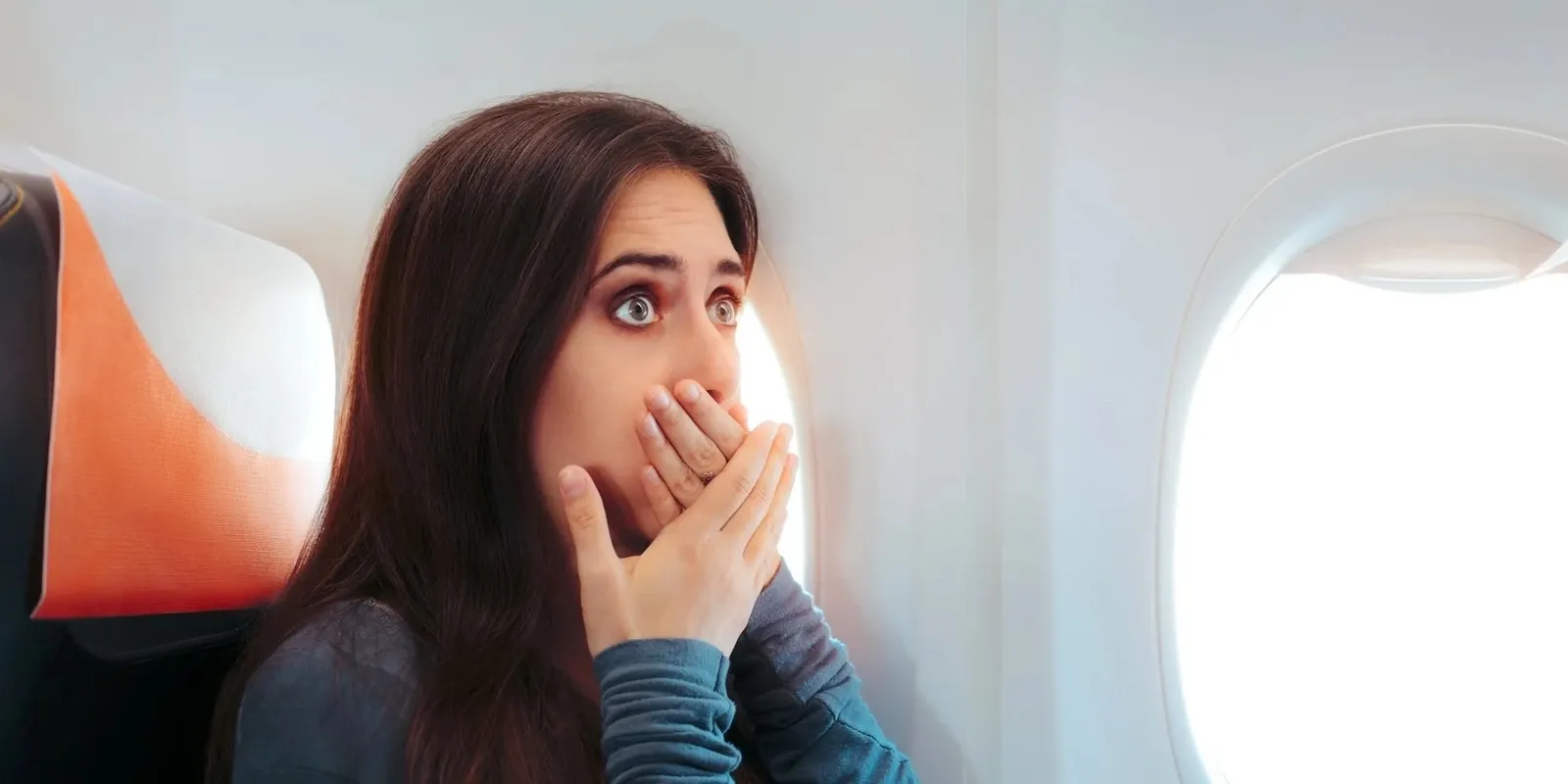
Fear of flying: strategies and solutions that really work
According to a YouGov survey, about 2 out of 10 Italians report having a fear of flying, a discomfort ranging from simple takeoff anxiety to full panic attacks. In most cases, it can be managed with specific practical techniques, to prepare before the flight and use on board.
Understanding what happens on board reduces anxiety
Much of the fear stems from not knowing how to interpret aircraft noises and movements. Turbulence is a normal, expected meteorological phenomenon, not a sign of structural danger: aircraft are certified with safety margins far exceeding the stresses even the strongest turbulence creates. For those who want to look at concrete numbers on aviation safety, this detailed guide collects the data and also indicates when to seek professional help.
The 4-7-8 breathing technique
One of the most used techniques to interrupt the spiral of anxiety during critical moments, such as takeoff or turbulence, is the 4-7-8 method: you inhale through your nose counting to four, hold your breath for seven seconds, and exhale slowly through your mouth for eight. Repeated for four or five cycles, it slows your heart rate and shifts your attention from anxious thoughts to counting.
Seating choice and substances to avoid
Choosing a seat over the wings, where movement during turbulence is less noticeable, reduces physical discomfort. Distraction techniques, such as listening to music or a podcast, help shift your focus away from anxious thoughts. It's also advisable to avoid caffeine and alcohol before the flight, as they amplify the physical symptoms of anxiety such as rapid heartbeat and sweating.
Courses for people afraid of flying
Several airlines organize specific courses led by pilots and psychologists: ITA Airways offers «Voglia di Volare» at Flight Centers in Rome and Milan, British Airways offers «Flying With Confidence», while easyJet provides «Fear Less Flyer», an online modular course. They explain in detail how the aircraft works and the sounds you hear on board, an element that alone reduces much of the anxiety related to the unknown.
If your anxiety focuses mainly on takeoff or turbulence, practice your chosen breathing technique on the ground, in any everyday stressful situation like a queue or traffic: arriving on flight day already able to perform it automatically makes far more difference than trying it for the first time on board.
You might also like...

Frankfurt-Hahn Airport: where to stay, areas and recommended hotels

Bahrain International Airport: where to stay, areas and recommended hotels
Jet lag: effective remedies to recover quickly
Lao Airlines: How to Fly in the Landlocked Country
The complete guide to departing from the airport