
Atlanta: what to see in 1 day
Atlanta is a city that develops in a broad and discontinuous way, grown around distinct poles rather than around a single historic center, and this is also why it's best to organize a first visit by zones rather than chase every single attraction scattered throughout the city. The most compact nucleus, suitable for someone with only one day, is the one linked to Centennial Olympic Park, the legacy of the 1996 Olympics, around which some of the city's most famous museums are concentrated.
From there it is possible to expand the route toward the neighborhood of Sweet Auburn, linked to the history of the civil rights movement, and toward the Atlanta BeltLine, a route carved from an old railway line that in recent years has transformed entire neighborhoods. Moving between these zones almost always requires a vehicle, since Atlanta is a city designed mainly for the automobile, with pedestrian islands concentrated only in certain areas.
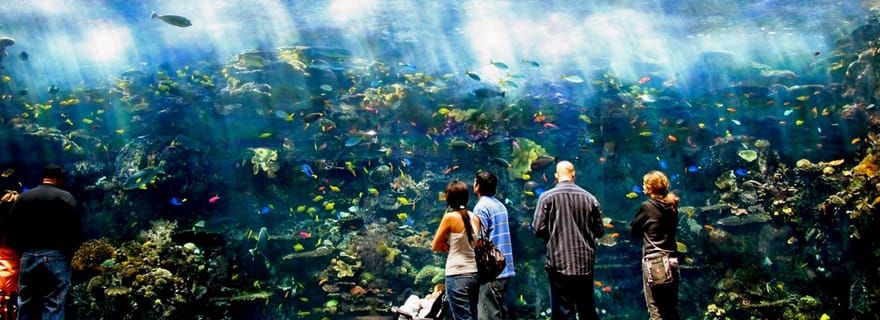
The morning can be dedicated to Centennial Olympic Park, the large green space built on the occasion of the 1996 Olympics, surrounded by some of the most visited museums in the city: the Georgia Aquarium, one of the largest in the world, and the World of Coca-Cola, dedicated to the history of the brand born right in Atlanta. Visiting both at leisure on the same day leaves little room for the rest of the route, so it is best to choose one: those interested in marine fauna will find the aquarium a stop of several hours, those preferring a lighter and quicker museum can head to the World of Coca-Cola.
From the park it is natural to move toward the Sweet Auburn neighborhood, linked to the history of Martin Luther King Jr.: here you find the birthplace, the Ebenezer Baptist Church where he preached, and the center that preserves his memory, in an area visited on foot that gives a very different image of the city from that of the great museums of the morning. The move from the park to Sweet Auburn is done comfortably with the light metro MARTA, which connects the two zones in a few minutes.
In the afternoon it is worth reaching a stretch of the Atlanta BeltLine, the pedestrian and bicycle path carved out of a former railway line that crosses various neighborhoods: the eastern stretch, that of Old Fourth Ward, is the most frequented, with murals, galleries set up in old industrial buildings and the covered market of Ponce City Market, also useful for a stop before continuing. It is a way of seeing a part of a newer city and less tied to great monuments, which complements the rest of the day well.
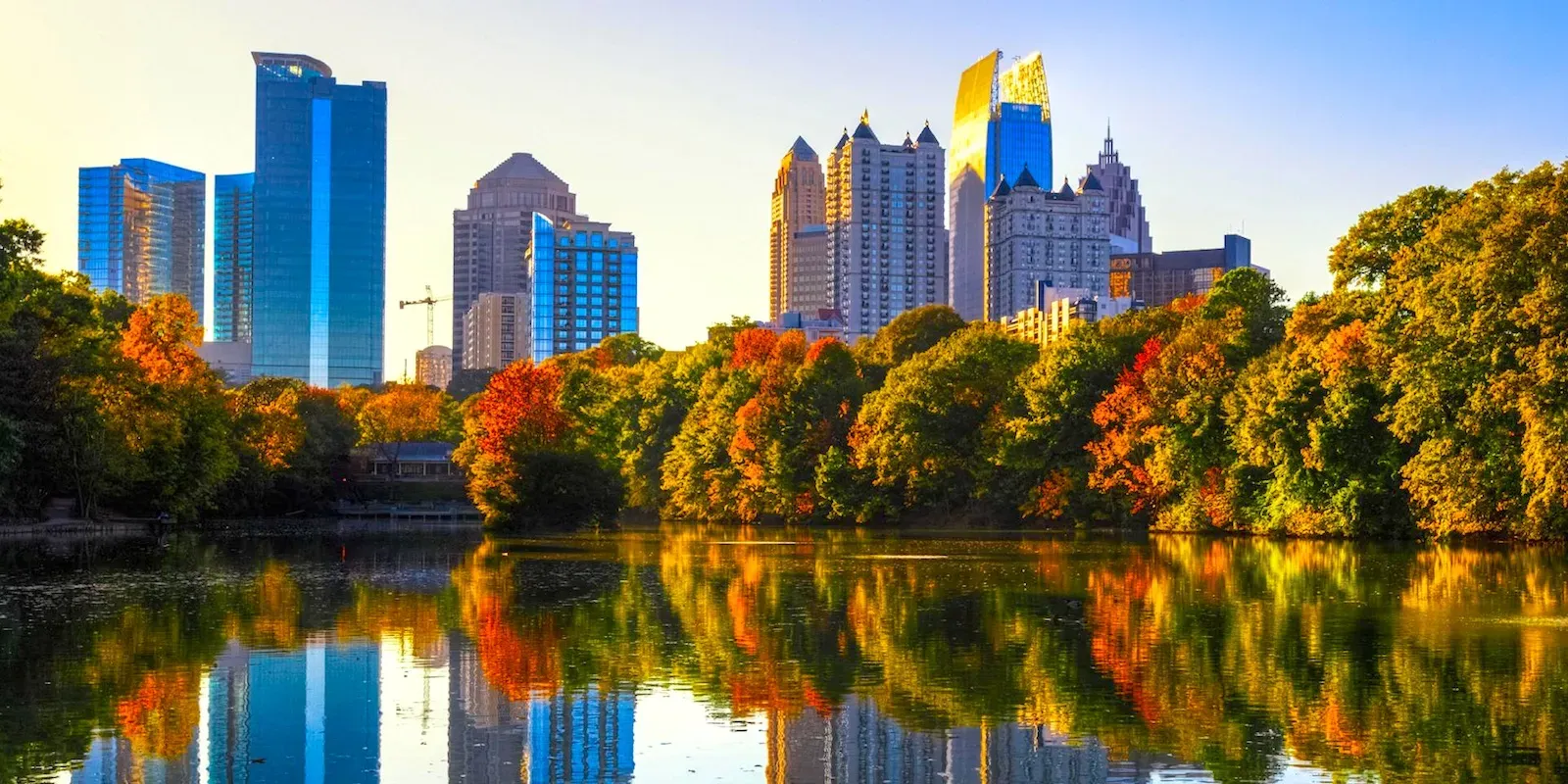
For those preferring to close with a wider green space, an alternative to continuing on the BeltLine is reaching the nearby Piedmont Park, which offers open lawns and a different view of the city's skyline: the two options are in the same area and do not require long journeys, so the choice depends more on the pace you want to give the last hours of the day than on distance. Movement between the different zones described almost always requires a car, a ride-hailing service or the MARTA for covered stretches, while within each area you move well on foot.
Atlanta can be touched, in just a few hours, in three rather different faces of the city: the museum and tourism face around Centennial Olympic Park, the historical one linked to civil rights at Sweet Auburn, and the more contemporary one of the BeltLine. Left out, by force of circumstance, are the more peripheral quarters and attractions that would require longer car travel, but the described route nonetheless remains sufficient to get an idea of the city without the feeling of having seen only an isolated fragment.
For those with more time, it nonetheless remains a city that lends itself to being explored neighborhood by neighborhood.
Guided tours and experiences in Atlanta

Related articles

You might also like...
Columbus: the world's longest urban rafting course
Chattanooga: the train that became a song

Port Harcourt International Airport: where to stay, areas and recommended hotels

Quimper-Cornouaille Airport: where to stay, areas and recommended hotels
Royal Air Maroc: Why Casablanca Became the Gateway to Africa