
Brest: the city rebuilt after the war
Almost completely razed during World War II for its importance as a naval base, Brest was rebuilt in concrete with an entirely new urban plan.
The center, almost entirely rebuilt after the war, is comfortably explored on foot.
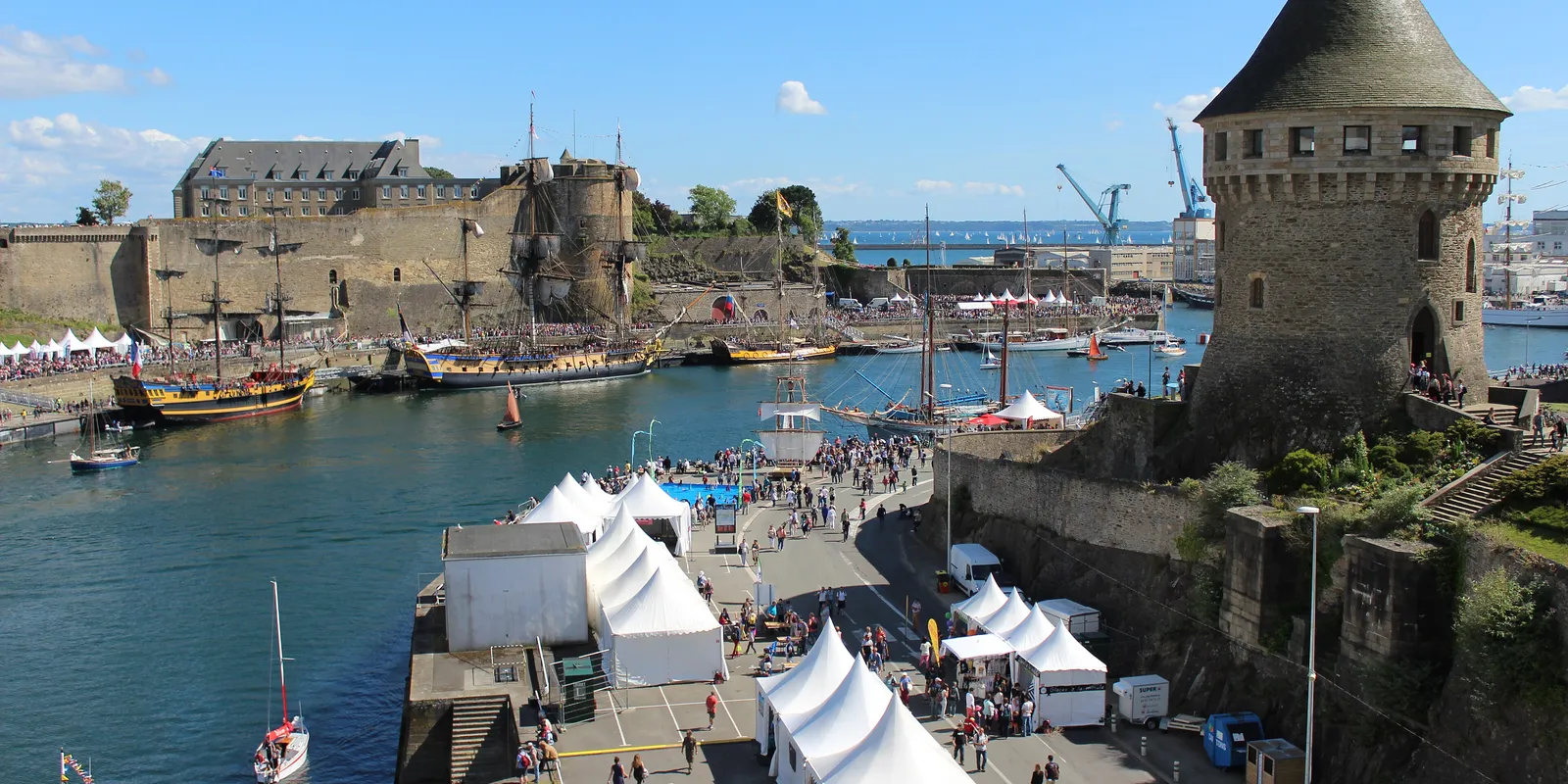
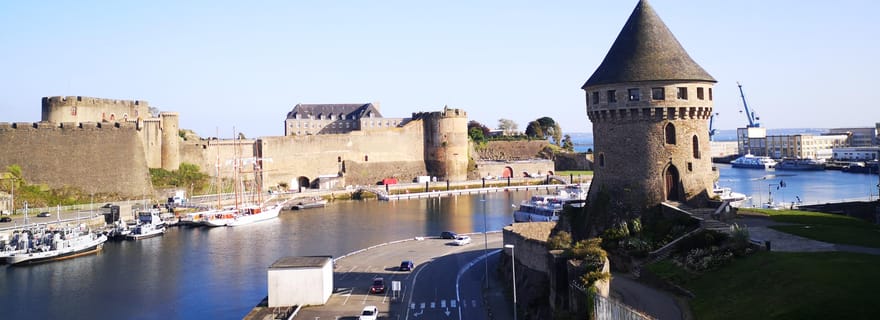
The Castle of Brest, the only monument to survive the 1944 bombardments, today houses the Naval Museum within its walls of Roman origin.
Just steps away, Oceanopolis, an aquatic park dedicated to marine ecosystems, recreates polar, tropical, and temperate environments under one roof, with tanks populated by sharks and jellyfish.
Walking through the reconstructed center, you observe the broad cement streets designed in the 1950s, in sharp contrast to the narrow alleys typical of other Breton cities spared from bombardment.
Towards evening, the military harbor, still today a French naval base on the Atlantic, is observed from viewing points along the city coast, with warships anchored in the roadstead.
Of Brest's historic center, nearly entirely razed in 1944, only the castle survives: everything else visible in the city today dates from postwar reconstruction.
Oceanopolis houses penguins in a climate-controlled environment designed to recreate polar conditions, a surprising detail for a city on the Atlantic Breton coast.
Guided tours and experiences in Brest
Related articles

You might also like...
Quimper: the most authentic Brittany
Lorient: from Nazi submarine pens to a Celtic festival

Banak Airport: where to stay, areas and recommended hotels

Poznań-Ławica Airport: where to stay, areas and recommended hotels

Flyr: The Norwegian Airline Born in 2021 and Bankrupt Just Nineteen Months Later