
Tbilisi: from sulfur baths to the glass bridge
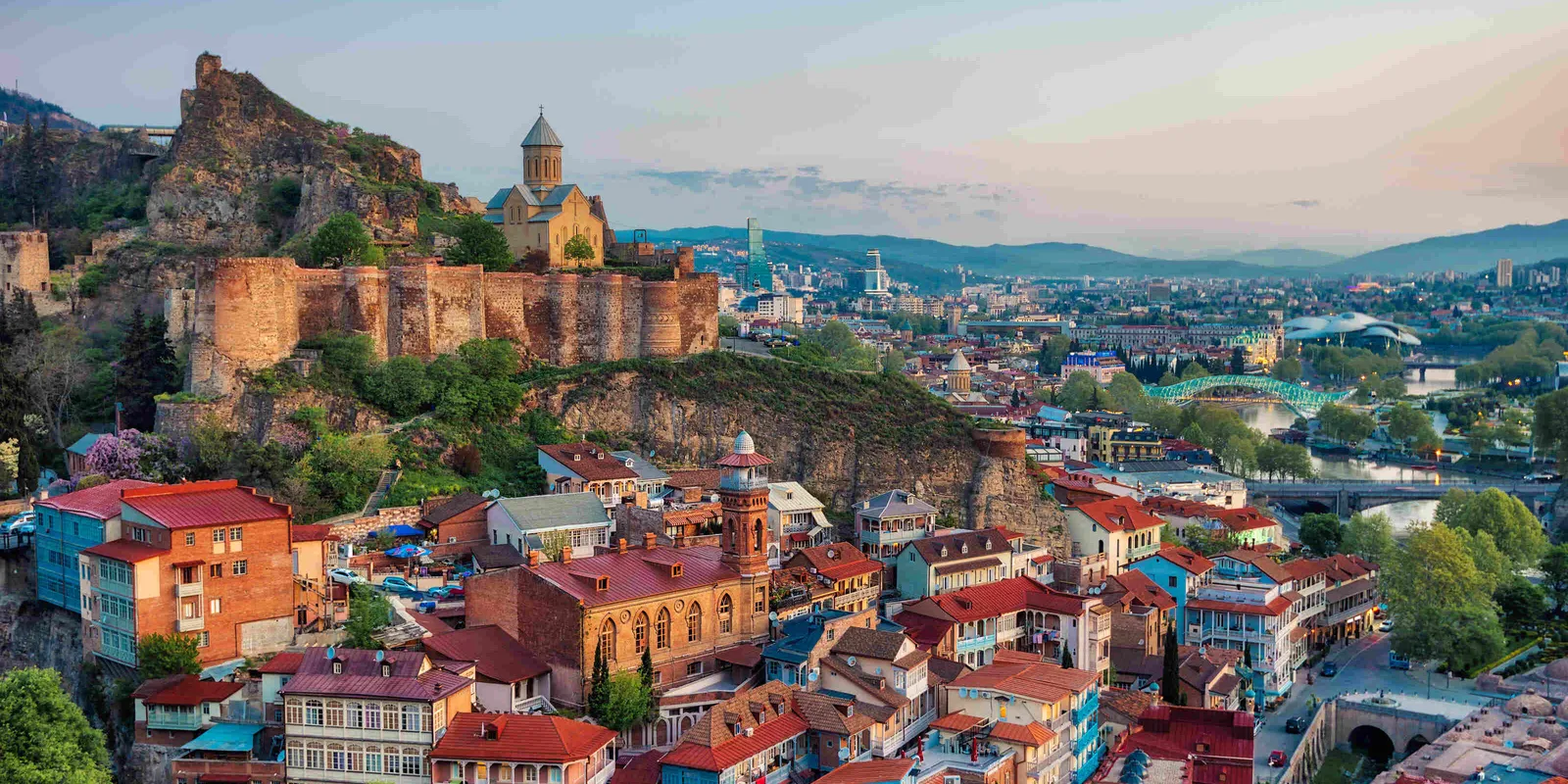
According to legend, a royal falcon discovered a hot spring here by chance while hunting, prompting the sovereign to found a city in the fifth century at this 'warm place'—the name Tbilisi means exactly that.
The center can be explored on foot; for the fortress a cable car is available.
In the Abanotubani quarter, the sulfurous thermal baths still in operation mark the exact spot where, according to legend, Tbilisi was founded.
By cable car, one ascends to the Narikala Fortress, whose earliest fortifications date to the fourth century, for a view dominating the entire old city.
Descending among the alleyways of the old city, one encounters wooden houses with carved balconies, survivors of centuries of Persian, Arab, and Mongol dominations.
Towards evening, the Bridge of Peace, a glass and steel structure from 2010, illuminates with patterns in Morse code visible from the entire old city.
The sulfur baths of Abanotubani are still frequented daily by residents, not just tourists: the naturally hot sulfur-rich water has flowed at the same temperature for fifteen hundred years.
The Morse code projected at night on the Peace Bridge doesn't transmit secret messages but chemical elements and other scientific symbols, according to its designers' original plan.
Guided tours and experiences in Tbilisi

Related articles

You might also like...
Gyumri: the black and red tuff houses
24 hours in Yerevan: what to see

Madrid Barajas International Airport: where to stay, areas and recommended hotels

Rzeszów-Jasionka Airport: where to stay, areas and recommended hotels

Kenmore Air: What It's Like to Fly by Seaplane from Seattle to the San Juan Islands